Build your own radio telescope
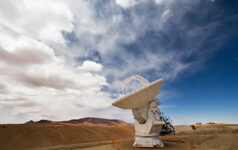
Astronomers use giant radio telescopes to observe black holes and distant galaxies. Why not build your own small-scale radio telescope and observe objects closer to home?
Showing 10 results from a total of 329
Astronomers use giant radio telescopes to observe black holes and distant galaxies. Why not build your own small-scale radio telescope and observe objects closer to home?
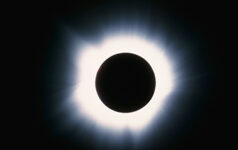
During an eclipse, the Sun or the Moon seems to disappear. What is happening? Why not explore this fascinating phenomenon in the classroom, with an easy to build model?
Did you know that you can use old hi-fi speakers to detect earthquakes? And also carry out some simple earthquake experiments in the classroom? Here’s how.
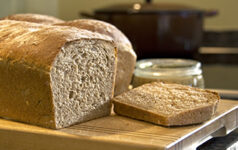
Something as everyday as bread can offer a surprising spectrum of interdisciplinary teaching opportunities.
Nektarios Tsagliotis explains how to build an effective microscope using simple materials – enabling your students to discover a hidden world, just as Robert Hooke did in 1665.
Ever wanted to launch a rocket? Jan-Erik Rønningen, Frida Vestnes, Rohan Sheth and Maria Råken from the European Space Camp explain how.
When you read the newspaper, how do you know what to believe? Ed Walsh guides you and your students through the minefield of science in the media.
The topic of polymers is often limited to chemistry lessons. The Establish project offers some hands-on activities to investigate these materials and some of their medical applications.
Did you realise that fireworks cause measurable air pollution? Tim Harrison and Dudley Shallcross from Bristol University, UK, explain how to investigate atmospheric pollutants in class.
Crowding affects us almost every day, from supermarket queues to traffic jams. Timothy Saunders from EMBL explains why this is interesting to scientists and how to study the phenomenon in class.
Build your own radio telescope
Creating eclipses in the classroom
Building a seismograph from scrap
Bread-making: teaching science in primary school
Build your own microscope: following in Robert Hooke’s footsteps
Sky-high science: building rockets at school
Bad science: how to learn from science in the media
Polymers in medicine
Smoke is in the air: how fireworks affect air quality
The physics of crowds