Light refraction in primary education: the solar bottle bulb
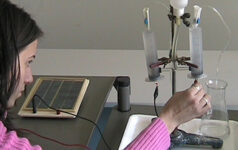
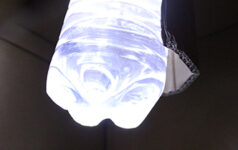
More than 10 years ago, a very clever and inventive inhabitant from a favela discovered he could produce light without electricity. Now solar bulbs are spreading all over the world.
Showing 10 results from a total of 326
More than 10 years ago, a very clever and inventive inhabitant from a favela discovered he could produce light without electricity. Now solar bulbs are spreading all over the world.
The smooth operation of communications satellites can be influenced by solar weather. Mimic this effect on a smaller scale in the classroom with a simple demonstration.
In Sweden there lives a small, green dragon called Berta, who invites young children to join her adventures in Dragon Land – all of which are about chemistry.
Bring discovery into the classroom and show students how to evaluate Planck’s constant using simple equipment.
Having difficulties explaining black holes to your students? Why not try these simple activities in the classroom?
Evolutionary relationships can be tricky to explain. By using simple, everyday objects, your students can work them out for themselves.
Using nothing but a pig’s heart, a knife and a supply of water, you and your students can investigate how the heart pumps.
The aurorae are one of the wonders of the natural world. Using some simple apparatus, they and related phenomena can easily be reproduced in the classroom.
Around 1.5 billion people worldwide are overweight or obese. Are we just eating too much or can we blame our genes? Here’s how to investigate the genetics of obesity in the classroom.
Taking pupils out of the classroom opens up a whole range of activities for teaching young children about the natural world.
Light refraction in primary education: the solar bottle bulb
Simulating the effect of the solar wind
The way of the dragon: chemistry for the youngest
Classroom fundamentals: measuring the Planck constant
Peering into the darkness: modelling black holes in primary school
Phylogenetics of man-made objects: simulating evolution in the classroom
From the bottom of our hearts: a hands-on demonstration of the mammalian heartbeat
Casting light on solar wind: simulating aurorae at school
The genetics of obesity: a lab activity
Science in the open: bringing the Stone Age to life for primary-school pupils