Structural colour: peacocks, Romans and Robert Hooke
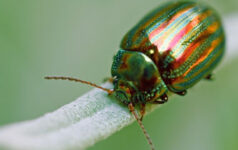
For thousands of years, nature has produced brilliant visual effects. What is the physical principle behind it and how can we use it?
Showing 10 results from a total of 163
For thousands of years, nature has produced brilliant visual effects. What is the physical principle behind it and how can we use it?
What makes a cell turn cancerous – and how does a cancer become infectious? In the second of two articles on transmissible cancers, Elizabeth Murchison explains what the genetic details tell us.
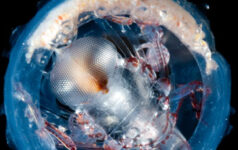
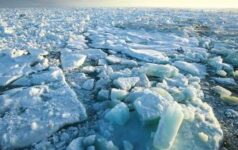
After four years travelling around the globe, the schooner Tara has returned with a world’s worth of scientific results.
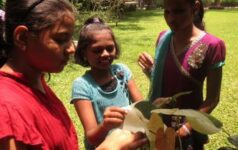
When next teaching photosynthesis, try these simple experiments with variegated plants.
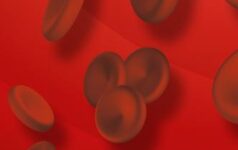
In this experiment, simple liquids that mimic blood are used to demonstrate blood typing.
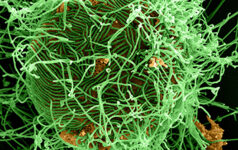
Discovering how infectious diseases spread may seem purely a matter for medical science – but taking a close look at the numbers can also tell us a great deal.
The basic chemistry of hair dyes has changed little over the past century, but what do we know about the risks of colouring our hair, and why do we do it?
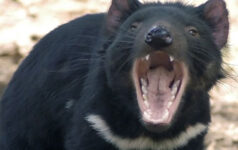
Is it possible to pass cancer from one individual to another? For some animals, it is – and, sadly, a unique Tasmanian species is facing possible extinction as a result.
Making pH-sensitive inks from fruits and vegetables is a creative variation of the cabbage-indicator experiment.
The path to the Moon is paved with many challenges. What questions do the next generation of space explorers need to answer?
Structural colour: peacocks, Romans and Robert Hooke
Infectious cancers: the DNA story
Tara: an ocean odyssey
Do leaves need chlorophyll for growth?
Investigating blood types
Ebola in numbers: using mathematics to tackle epidemics
Colour to dye for
Infectious cancers
An artistic introduction to anthocyanin inks
The challenging logistics of lunar exploration