
Articles

Filter
Age group
Topic
Filter

Showing 10 results from a total of 177

| Issue 22

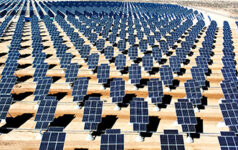
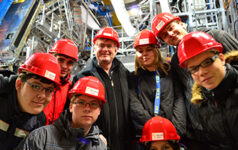
Harnessing the power of the Sun: fusion reactors

Renewable, clean, unlimited energy – how can it be achieved? Christine Rüth from EFDA introduces the tokamak, the most advanced fusion device.

Ages: <11, 11-14, 14-16, 16-19;
Topics: Physics, Chemistry, Engineering
           

| Issue 22

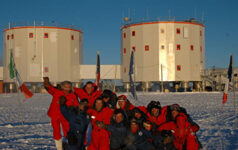
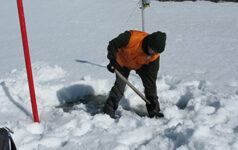
Revealing the secrets of permafrost

Studying permafrost enables us to look not only into the past, but also into the future. Miguel Ángel de Pablo, Miguel Ramos, Gonçalo Vieira and Antonio Molina explain.

Ages: 14-16, 16-19;
Topics: Physics, Astronomy / space, Earth science, Engineering
       

| Issue 22

Maggie Aderin-Pocock: a career in space

As a child, Maggie Aderin-Pocock dreamed of going into space. She hasn’t quite managed it yet, but she’s got pretty close, as she tells Eleanor Hayes.

Ages: 14-16, 16-19;
Topics: Physics, Astronomy / space
             

| Issue 22

Sky-high science: building rockets at school

Ever wanted to launch a rocket? Jan-Erik Rønningen, Frida Vestnes, Rohan Sheth and Maria Råken from the European Space Camp explain how.

Ages: 14-16, 16-19;
Topics: Physics, Astronomy / space, Mathematics
     

| Issue 21

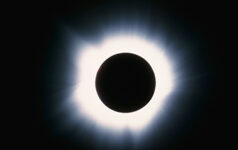
How I killed Pluto: Mike Brown

To change the world would be amazing enough. Mike Brown changed the Solar System. Eleanor Hayes explains.

Ages: <11, 11-14, 14-16, 16-19;
Topics: Physics, Astronomy / space
               

| Issue 21

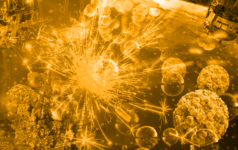
Smoke is in the air: how fireworks affect air quality

Did you realise that fireworks cause measurable air pollution? Tim Harrison and Dudley Shallcross from Bristol University, UK, explain how to investigate atmospheric pollutants in class.

Ages: 14-16, 16-19;
Topics: Chemistry
       

| Issue 21

The physics of crowds

Crowding affects us almost every day, from supermarket queues to traffic jams. Timothy Saunders from EMBL explains why this is interesting to scientists and how to study the phenomenon in class.

Ages: 14-16, 16-19;
Topics: Physics