Our DNA is the blueprint of life, but epigenetics interprets how it is read. Learn how epigenetics controls our genes, enables life and shapes who we are.
Have you ever wondered how we are made up of so many different cell types, such as brain or liver cells, yet all of them carry the same DNA? A phenomenon playing a major role in enabling this variety is epigenetics.[1] It can regulate whether genes are switched ‘on’ or ‘off’, without changing the DNA sequence. Essential processes, including development and cell differentiation, rely on its mechanisms. However, epigenetic mechanisms can be influenced by external factors, such as social stress (bullying, loneliness…) or environmental influences (UV light, pesticides…). The establishment of unexpected epigenetic modifications can increase the risk of developing diseases.[1] In some cases, these modifications can be passed on through generations, meaning that the life experiences of your parents or even your grandparents might influence your health.[2]
The central dogma of biology: from DNA to proteins
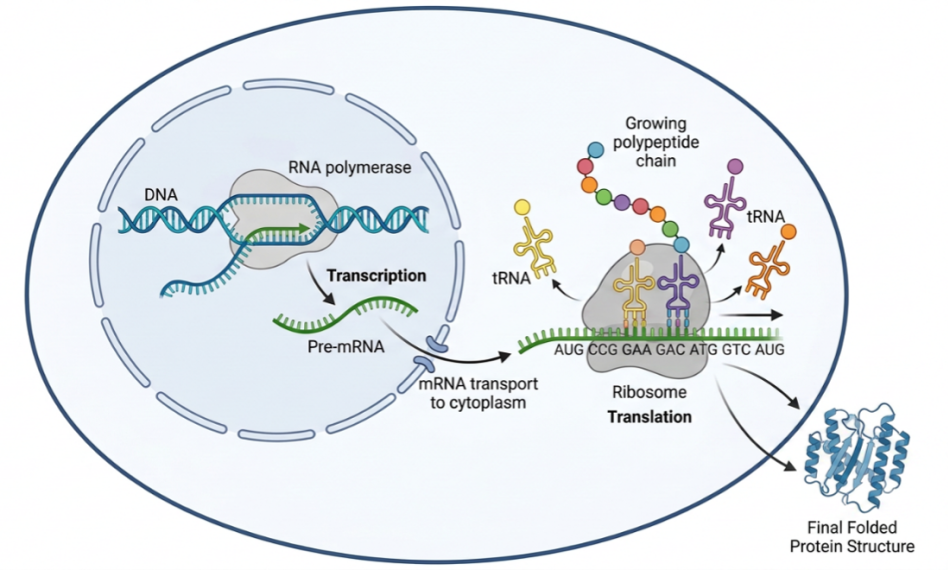
For now, let’s take a step back and look at the fundamental principle of genetics.Making proteins from DNA is essential for survival, a process known as the ‘central dogma of biology’ (figure 1).[3,4]The DNA is a unique sequence of four bases: adenine (A), thymine (T), cytosine (C), and guanine (G), which stores all information necessary for our lives, including protein synthesis. To generate proteins, DNA is first transcribed into messenger RNA (mRNA) by the enzyme RNA polymerase. After unwinding the DNA helix, the polymerase reads the DNA base by base and generates a complementary single-stranded mRNA. Since bases pair specifically (A with T, G with C), the correct bases are added automatically, with the difference that in RNA, T is replaced by uracil (U). The quantity of RNA produced depends on whether a gene is switched on or off, referred to as gene expression. Next, mRNA travels from the nucleus to the cytoplasm, where translation takes place. Here, a large protein complex called a ribosome reads the mRNA codon by codon. Each codon represents a specific three-base sequence that corresponds to an amino acid. Every codon is recognised by a complementary transfer RNA (tRNA) that carries that specific amino acid (aa). The incoming aa´s are then linked together into a polypeptide chain, which then folds into its 3D structure, forming a functional protein.[3]
Importantly, some RNA molecules are not translated into proteins. These non-coding RNAs (ncRNAs) perform their functions directly as RNA.
Figure 1: Schematic illustrating the central dogma of molecular biology: DNA is transcribed into RNA, which is then translated into protein. Image courtesy of the author, created using BioRender.com
The concept of epigenetics
Now that we know the basics of genetics, let’s dive into the fascinating concept of epigenetics. Epigenetics is defined as a mechanism that regulates gene expression by modifying the DNA or its interacting molecules, such as histones or ncRNA, rather than changing the underlying sequence.[2]
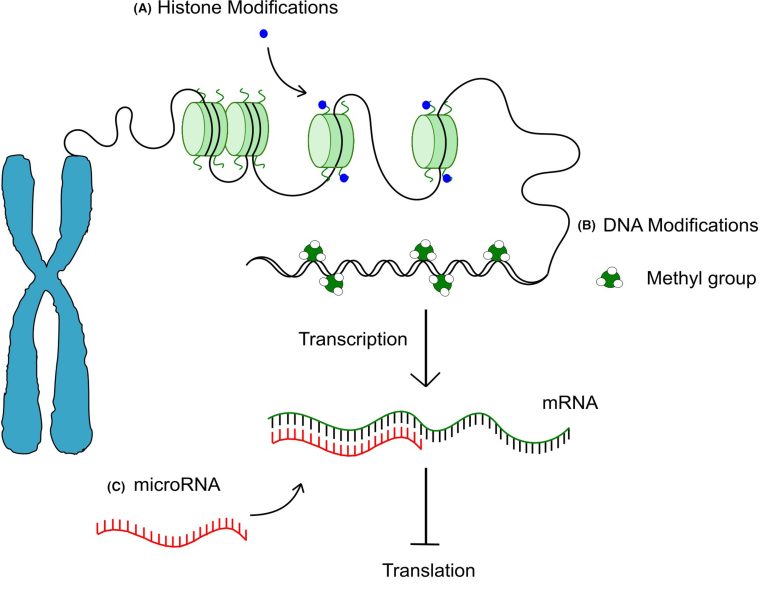
Generally, epigenetic mechanisms can be grouped into three main types, that act at different levels of gene regulation (figure 2).[2]
DNA methylation:
Proteins known as DNA methyltransferases deposit the chemical group methyl (CH3) onto DNA bases, most commonly cytosine. As a result of these modifications, affected genes become inaccessible for transcription, which turns them off.[1]
2. Histone modifications:
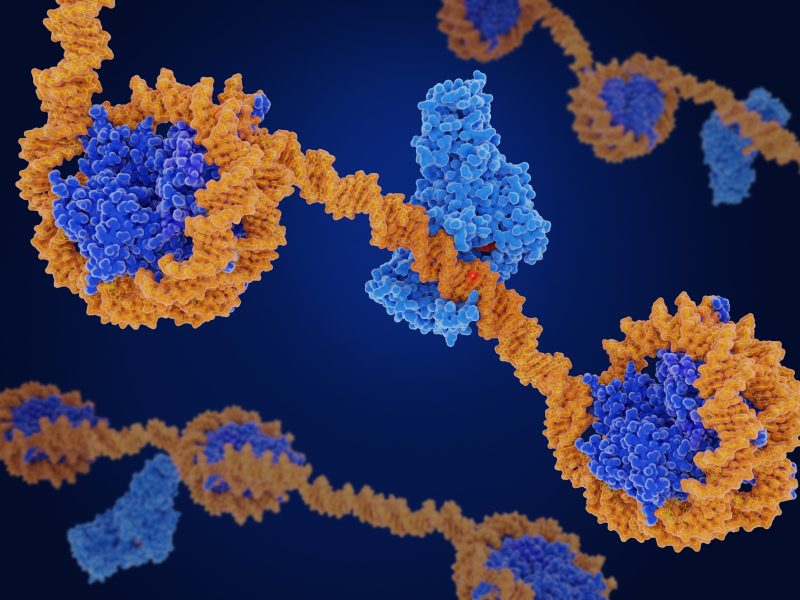
To help organise the immense amount of DNA within the cell nucleus, it is wrapped around special proteins known as histones, forming a more densely packed form of DNA known as chromatin. Attaching small chemical groups to the histones, such as methyl or acetyl groups, alters gene expression.[1] While the exact effects of histone modifications on transcription and the mechanisms behind it are not fully understood, it can introduce changes in charge. DNA is negatively charged due to its phosphate backbone, while histones are rich in positively charged amino acids (lysine and arginine), enabling a tight histone-DNA interaction. For example, when an acetyl group binds to a lysine residue, its positive charge is neutralised, thereby weakening the DNA-histone interaction and increasing DNA accessibility. In most cases, this boosts transcription, but not always.[1]
RNAs:
The final regulatory layer involves RNA-based mechanisms. Various types of RNA, including the aforementioned non-coding RNAs (ncRNAs), can influence gene expression. There are different types of ncRNAs that work through different mechanisms. Long ncRNAs can recruit chromatin-modifying enzymes to specific loci (i.e., areas on the DNA strand), thereby altering DNA accessibility. Small ncRNAs, such as microRNAs, bind to complementary mRNAs, thereby inhibiting translation or marking them for degradation.[5]
Together, these mechanisms form a complex network that fine-tunes gene expression.
Figure 2: An overview of different epigenetic mechanisms regulating gene expression. (A) The regulation of the chromatin structure through modifications to histone proteins, including acetylation and methylation. (B) The addition of methyl-groups to DNA bases (most commonly cytosine). (C)The regulation of transcription via small RNA molecules, such as microRNAs. Image: Smith et al./Neuropathology and Applied Neurobiology
Epigenetics facilitates dynamic changes in our genome
To show you the relevance of epigenetics, let me give you some examples:
Cell differentiation:
Cell differentiation describes the process by which a cell divides to form a cell with a different function. For example, a precursor neuron cell divides into a mature neuron cell. Changes in the epigenetic modification of immature cells alter the set of expressed genes, thereby guiding the differentiation. This control enables a single fertilised egg to develop into an organism composed of hundreds of different cells.[6]
Transgenerational inheritance:
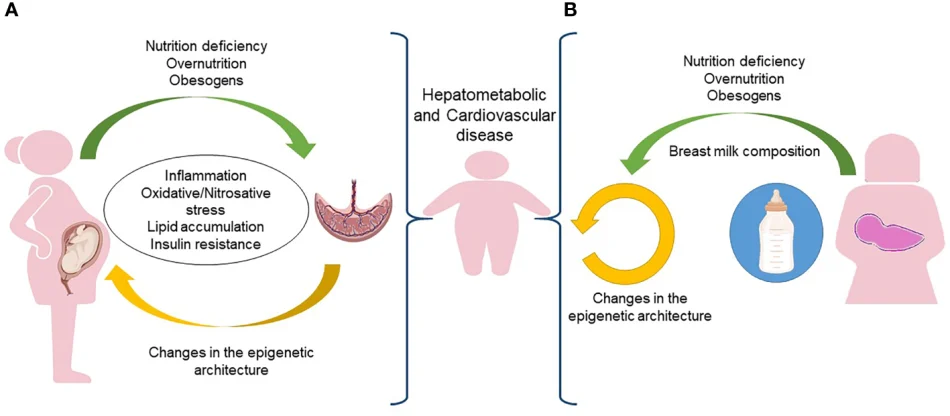
Epigenetic modifications can be passed on to future generations. However, this process is not trivial. During the formation of sex cells, most marks are erased so that the cells can return to their totipotent state. In that state, the cells can give rise to all cell types through multiple cycles of differentiation. This erasure happens both actively by enzymes and passively during cell division. But here comes the fascinating part: some marks escape this process with the help of protective proteins and can be inherited across generations, a phenomenon known as epigenetic memory. A well-known example is the Dutch famine of 1944–1945, also known as the Dutch Hunger Winter. Offspring from the generation that suffered from malnutrition during this period were at an increased risk for developing a disease associated with changes in DNA methylation (figure 3). These changes can persist through multiple generations, influencing traits such as metabolism and stress response.[7]
Figure 3: Influence of prenatal (A) and postnatal (B) factors on epigenetic programming. Maternal nutrition and environmental exposures shape the offspring’s health trajectory through placental and breast milk pathways. Image taken from Ref. [7]
Conclusion
Over the past years, interest in epigenetics has increased immensely, and significant progress has been made in understanding how gene expression can be altered without changing the underlying DNA sequence. This knowledge enables us to improve health, prevent disease and understand environment influences.[8] With a better understanding of how diseases arise, we can use epigenetic changes as biomarkers to predict disease risk and as targets for prevention or treatment. This opens new approaches tackling diseases such as cancer or neurodegenerative diseases, thus potentially making our population healthier.[8]
Discover genetic indicators leading to obesity: McLusky S, Malagrida R, Valverde L (2013) The genetics of obesity: a lab activity. Science in School 26: 25–30.
Take a look behind the scenes of popular TV detective series: Müller S, Göllner-Heibült H (2012) Genetic fingerprinting: a look inside. Science in School22: 49–56.
Teach students how to collect relevant data regarding a gene from biological databases: Grazioli C, Viale G (2022) A chromosome walk. Science in School57.