Supporting materials
Download
Download this article as a PDF



To mark Science in School ’s 20th anniversary, we are launching a student writing competition inviting young people to explore the topic of sustainable and resilient tourism.
All details below are also available in our downloadable and printable flyer.
2027 is set to be the International Year of Sustainable and Resilient Tourism. What better topic could we choose for our competition?
Tourism is not inherently ‘good’ or ‘bad’, it is a system with trade-offs. A destination can boost local jobs and cultural exchange while overusing water, increasing emissions, and stressing ecosystems. Resilience adds another layer: tourism must function despite increasingly frequent disruptions such as heatwaves, floods, wildfires, coral bleaching, supply-chain shocks, etc.
The competition invites students aged 14 to 19 years to write an article dealing with current advances/ongoing research in natural science and technology to contribute to sustainable and resilient tourism in a broader picture. However, we do not want a general overview of sustainable and resilient tourism! Instead, we encourage students to zoom in on one specific research project, technology, intervention, or local solution and explain how it contributes to sustainable and resilient tourism. Sometimes a project is not obviously about tourism, but it may still support sustainable tourism goals.
We also encourage the writers to go beyond desk research where possible: speaking to researchers, practitioners, tourism organisations, museums, or local authorities (e.g., via a short interview or email) can add authenticity and strengthen the article. A teacher/mentor (see teacher guide) is allowed to support the students in their work, especially with writing in English. However, students need to remain lead authors!
The article can be written in one of the following formats:
Other requirements:
To all non-native English speakers: Do not hesitate to submit! We prioritise the quality of the idea, the accuracy of the content, the clarity of the explanation, the overall structure, and an engaging tone over language proficiency.
As part of the competition, we will edit the winning articles. Students will be asked to revise their article based on our feedback, like in a standard publishing process. We encourage mixed-age teams: older students can help with English and explaining complex concepts, while younger students can take the lead in shaping the article.
All of this will help students strengthen their ability to find, evaluate, and cite sources, communicate science to a given audience, and revise their work based on feedback, while learning about the important topic of sustainable and resilient tourism.
Three winning articles will be published in Science in School in the first issue of 2027, giving students the opportunity to share their work with thousands of educators. Winning teams will also receive a certificate in recognition of their engagement in science education, along with additional rewards!
PS: Winning teams are also encouraged to translate their article into their native language, which will then be published as well.
Before submission, a quick look at the checklist helps make sure everything is ready.
Send your article in the template file by email to editor@scienceinschool.org. Please use the subject line ‘Writing Contest 2026/2027’, and also attach the completed submission form, available on our website.
Submission deadline is the 1 August 2026.
If you have any questions about the topic, the submission, or anything else, just send us an email at editor@scienceinschool.org.
We are looking forward to the submissions!
AI is part of the world we learn and work in, so simply banning it is neither realistic nor helpful. But using it without questioning its output is not the answer either.
What matters is learning how to use AI responsibly. This is also our standpoint for this writing competition: students may use AI as a co-thinking tool. In our student info sheet on AI, we explain exactly what we mean by this, provide concrete examples for each step of the writing process, and highlight the risks of uncritical use of AI. And for the teachers, we have published a teacher info sheet with ideas on how to support students in developing responsible AI use. Both are linked in the supporting materials.
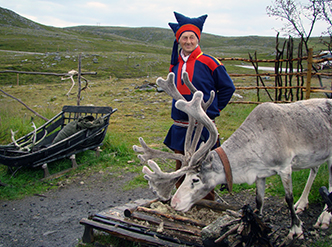
In Arctic regions, landscapes are changing fast. This has profound effects on their biological systems, but how are communities and their traditional…


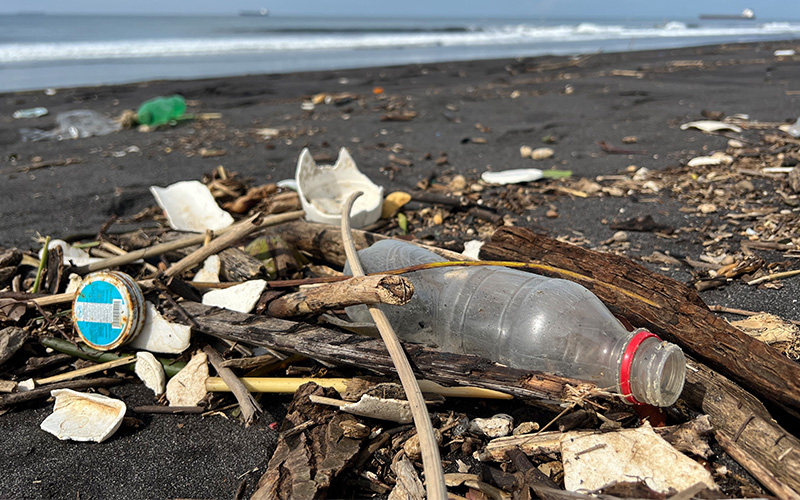
Turn a beach visit into a science adventure! Explore the animals, plants, shells, and even litter stranded on the beach to reveal the secrets of marine life and ocean dynamics.
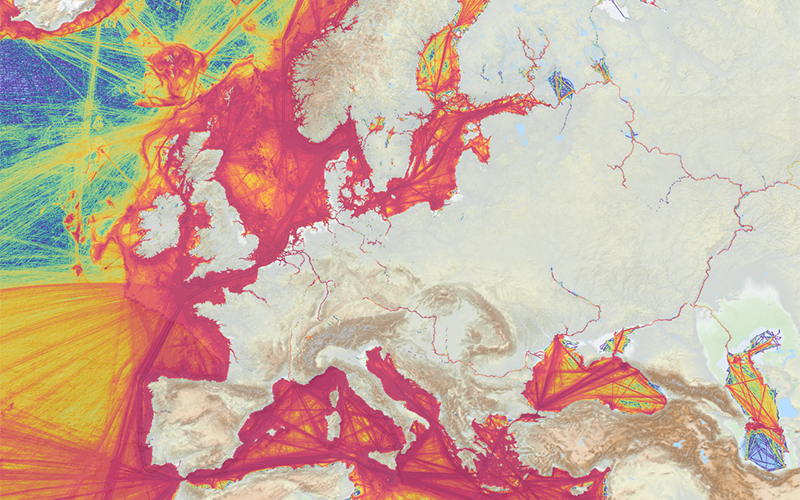
Looking for a user-friendly interactive map-based educational tool on the ocean? Dive into the European Atlas of the…
