Plasma: The fourth state
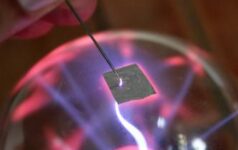
Plasma is the fourth state of matter, after solid, liquid and gas – but what is it like and what can it do? Plasma globes allow us to answer these questions – and more.

Showing 10 results from a total of 177
Plasma is the fourth state of matter, after solid, liquid and gas – but what is it like and what can it do? Plasma globes allow us to answer these questions – and more.
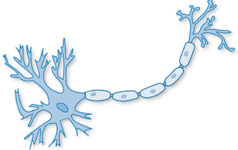
Studies of radiocarbon are helping scientists to understand how neurons remain stable yet adaptable.
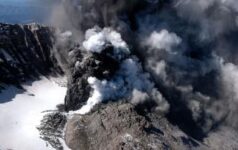
Using effervescent heartburn tablets, model the action of volcanoes to measure the intensity of the explosions and create your own measurement scale.
Win the Beamline for Schools competition and take a trip to CERN to do your own real-life particle physics experiment.
Use one of the most surprising experiments in classical mechanics to teach the scientific method, video analysis and mechanics.
Teaching viscosity can be sweetened by using chocolate.
Get your students to use their smartphones for some hands-on astronomy.
One of the world’s largest migrations is probably driven by a hormone that governs our sleep patterns.
Take a closer look at the construction of European XFEL.
Plasma: The fourth state
The element of surprise
Measuring the explosiveness of a volcanic eruption
CERN’s high-school physics competition shines bright
Can something accelerate upwards while falling down?
Melts in your viscometer, not in your hand
Smart measurements of the heavens
How plankton gets jet-lagged
Making laser flashes meet their mark