Showing 10 results from a total of 335
September 2, 2024 | Issue 69
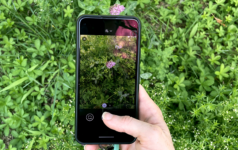
Small but mighty: investigate the role of herbaceous plants in the school garden for their contribution to biodiversity and sequestering carbon dioxide.
Ages: 14-16, 16-19; Topics: Biology, Earth science, Science and society, Sustainability
June 3, 2024 | Issue 68
Extract DNA from fruit using household ingredients and then explore the challenges of gene sequencing by assembling a fragmented poem.
Ages: 14-16, 16-19; Topics: Biology, Science and society, Sustainability, Resources
June 3, 2024 | Issue 68
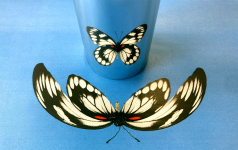
Through the looking glass: unlock the secrets of anamorphosis, where art and science meet to create mind-bending illusions!
Ages: <11, 11-14, 14-16, 16-19; Topics: Mathematics, Physics, STEAM
June 3, 2024 | Issue 68
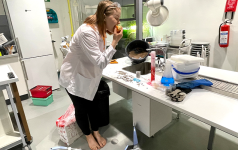
What can go wrong in a chemistry lab? Explore lab safety and consolidate the new knowledge by creating a fun horror story about a lab disaster.
Ages: 11-14; Topics: Chemistry, General science, Science and society, STEAM
June 3, 2024 | Issue 68
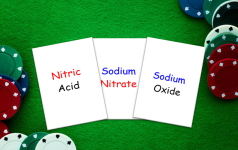
Play your cards right: Everyone enjoys playing games, so use chemical card games to get students to learn through play without them realising.
Ages: 11-14, 14-16, 16-19; Topics: Chemistry
April 4, 2024 | Issue 67
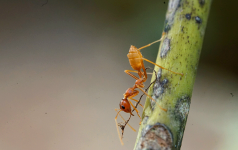
A walk on the wild side: invite some ants to take a walk on your petri dish and discover how bacteria from their feet could help us reduce pesticide use.
Ages: <11, 11-14, 14-16, 16-19; Topics: Biology, Sustainability
April 4, 2024 | Issue 67
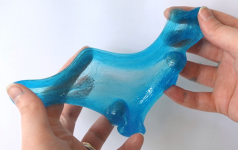
Is it a solid? Is it a liquid? It’s slime! Make slime to explore viscoelasticity and then complete a material science design challenge.
Ages: <11, 11-14, 14-16; Topics: Chemistry, Engineering, STEAM
April 4, 2024 | Issue 67
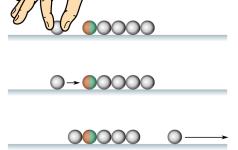
Build a linear accelerator to demonstrate spallation – the source of high-energy neutrons used by the new European Spallation Source being built in Sweden.
Ages: 14-16, 16-19; Topics: Engineering, Physics
March 25, 2024 | Issue 67
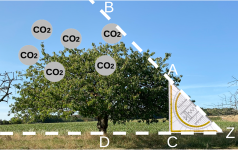
Biology, maths, and the SDGs: estimate the CO2 absorbed by a tree in the schoolyard and compare it to the CO2 emissions of a short-haul flight.
Ages: 11-14, 14-16, 16-19; Topics: Earth science, Biology, Chemistry, Mathematics, Science and society, Sustainability
February 1, 2024 | Issue 66
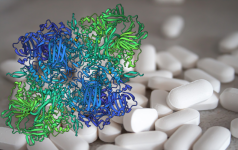
Lactase tablets for managing lactose intolerance can be used in the classroom to explore the biochemistry of sugars and the properties of enzymes.
Ages: 14-16, 16-19; Topics: Biology, Chemistry, Health, Science and society