Imagine sending music across the room by laser. Sounds impossible, doesn’t it? But Alessio Bernardelli’s students did just that – and then developed a play to explain the science behind it. Here’s how to do it.
Ages: 14-16, 16-19; Topics: Physics, Engineering, General science
Gyro-cars, gymnastic cats and a slow-motion slap in the face. Lucy Patterson spoke to Rudolf Ziegelbecker, an Austrian physics teacher, about how to catch the imagination of even the most anti-physics students.
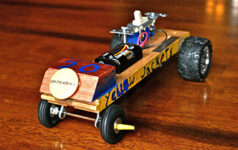
Physical science teacher Nicolas Poynter wanted his students not only to learn but also to think for themselves. His solution: a competition to build the fastest car!
Gabriel Cuello from the Institut Laue-Langevin (ILL) in Grenoble, France, introduces a new type of digital memory that may revolutionise our USB sticks.
Nanoscale: Visualizing an Invisible World is a beautifully produced book, filled with engaging text and attractive illustrations, which provides a captivating tour of the ‘invisible’ world of the nanoscale.
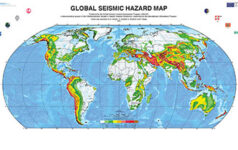
Earthquakes can be devastating. Is there anything we can do to resist them? Francesco Marazzi and Daniel Tirelli explain how earthquake-proof buildings are designed and tested.
Are you looking for ideas to spice up your earth science class? Why not try out one of the rich collection of activities developed by Chris King, Elizabeth Devon and Peter Kennett from Earth Learning Idea.
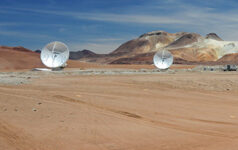
Claudia Mignone and Douglas Pierce-Price take us on a trip to the Chilean Andes, to the site of ALMA, the world’s largest radio astronomy facility, which is set to discover the secrets of our cosmic origins.