
Tell me about it: adventures in science communication
Scientists often need to communicate their subject to non-experts, such as policymakers and the public. This absorbing structured activity challenges…
General science





If you’re passionate about young people asking, investigating and sharing scientific questions that matter to them, read on and be inspired!
Great Science Share for Schools (GSSfS) is an international campaign that provides a programme of resources, training and a community to support teachers to improve the opportunities for their pupils to work scientifically.[1] The campaign seeks to inspire pupils aged 5–14 to ask, investigate and share their own scientific questions, underpinned by values of collaboration, inclusion and learner-led engagement. GSSfS was launched in 2016 by the University of Manchester’s Science & Engineering Education Research & Innovation Hub (SEERIH), who continues to design and coordinate the campaign programme, which reached over one million registered young people in 58 countries in its first 10 years.
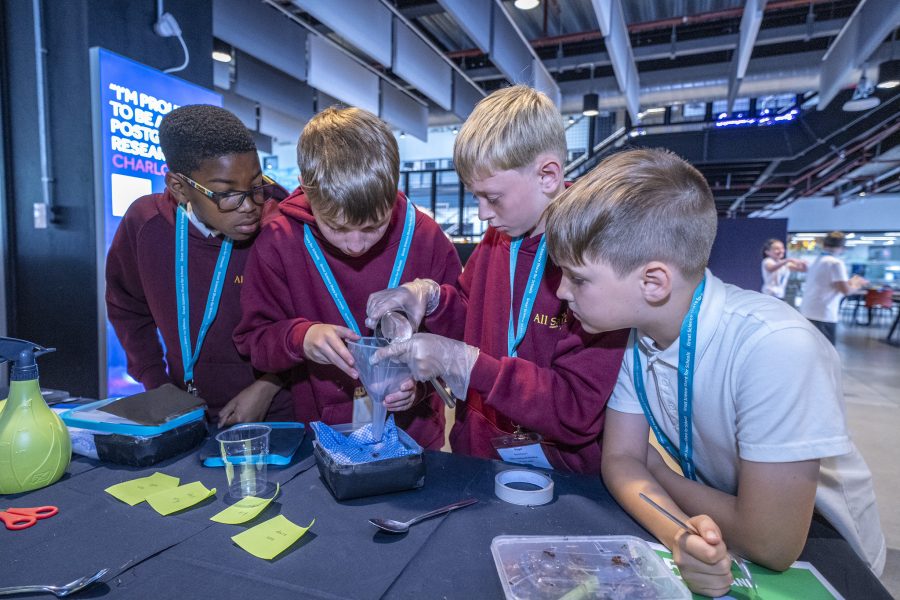
Although the fundament of science is the asking and answering of questions about the world around us, there are still too many young people in classrooms who experience science differently. Often lacking opportunity for practical, hands-on exploration or data gathering, science can become focused on finding the right answer rather than exploring meaningful questions. The Great Science Share for Schools (GSSfS) campaign was established to change this dynamic by providing teachers with inspiration to place pupil’s curiosity, communication and scientific thinking at the heart of regular science learning.
Since its launch in 2016, the Great Science Share for Schools has grown into an international campaign that encourages young people to explore scientific questions that matter to them. What began as a local initiative has become a global movement involving schools, universities, research organisations, industry partners and families, united by a simple vision: to inspire young people to ask, investigate and share science.
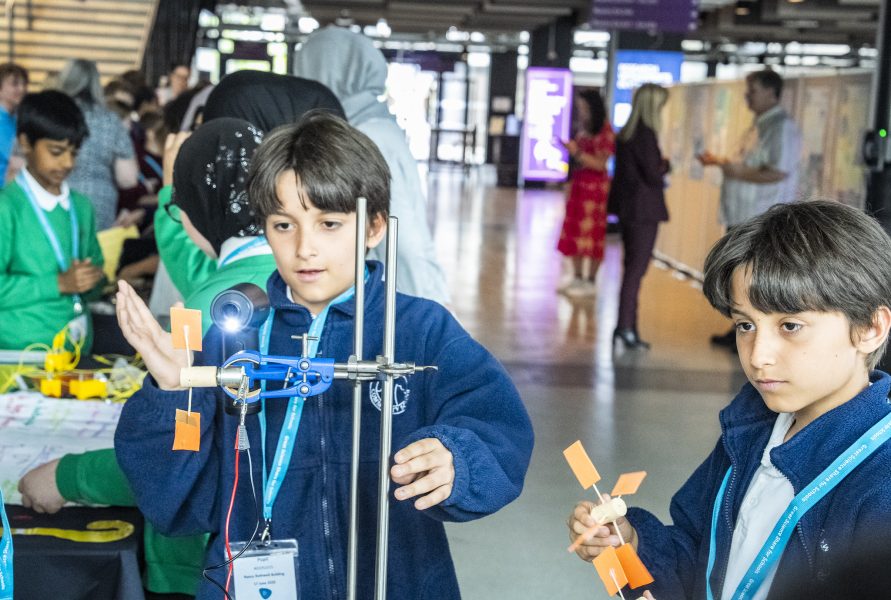
At a time when societies face increasingly complex challenges, from climate change and biodiversity loss to health inequalities, developing scientifically informed citizens is more important than ever. The GSSfS campaign provides teachers, and educators, with resources, tools and modelled teaching plans. Most importantly, however, it offers support and a community of practice so that everyone can become more confident in practical, enquiry-based learning in their settings. As teachers ourselves, we focus heavily on keeping an open-door culture to the campaign, welcoming collaboration with educators across the globe and organisations that promote STEM learning. Ultimately, we are all seeking to empower young people with quality opportunities where they view themselves not simply as learners of science, but as active contributors to scientific conversations through a sharing culture. Can you relate to this?
The campaign revolves around a simple framework:
As a teacher, you can engage in ways that suit your context and pupils’ interests. This is open to teachers and educators in a wide range of settings, from regular schools to educators working in hospital schools, museums, botanical gardens, zoos etc. You can take part across the school year, involving pupils in science enquiry connected to themes and ideas stimulated by the annual campaign theme – which this year is sensory science – or as a focused 2–3 week intervention or club.
Teachers who engage in the campaign describe how this inspires:
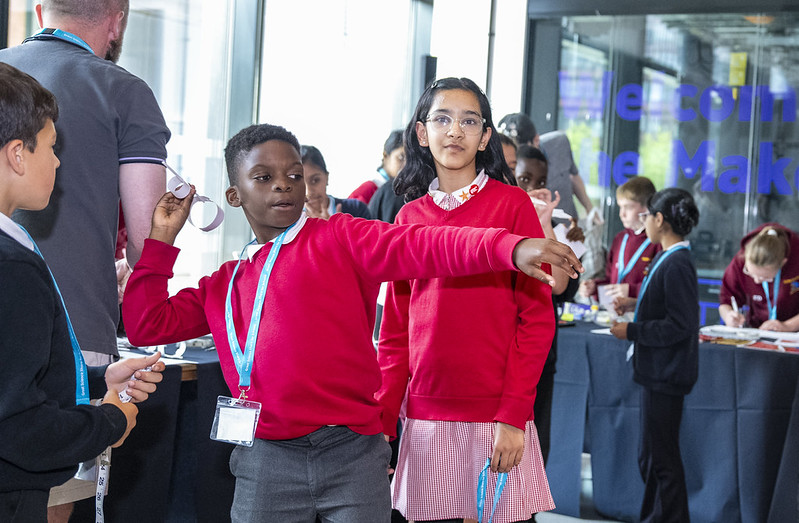
At the heart of the campaign is science communication, with pupils talking about questions that matter to them, collaborating to gather data and interpret findings, and ultimately sharing those findings with other people. Some schools organise dedicated Great Science Share days, while others embed activities throughout the year. Pupils showcase their investigations to each other and school audiences, often creating presentations, producing videos and designing table-top activities. The focus on them sharing the outcomes from their own investigations and improving other people’s understanding, has shown to be a powerful motivation for learning.
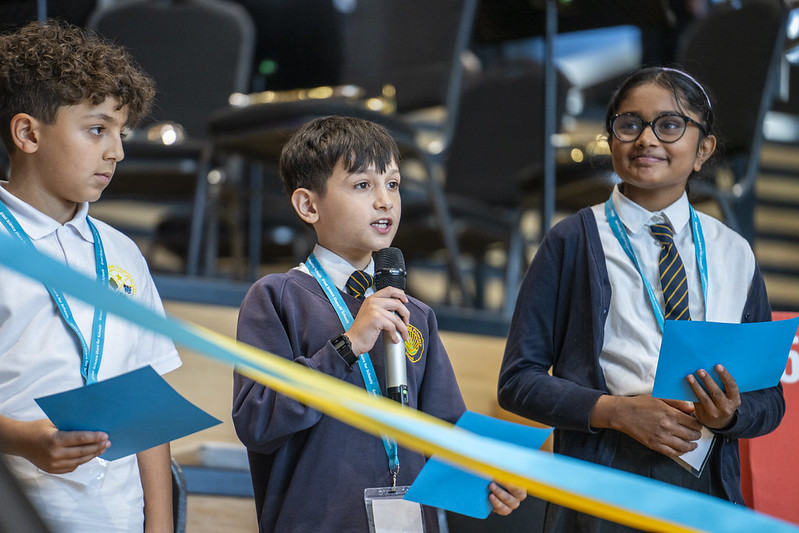
The approach is deliberately flexible and inclusive. There are lessons called `Great Guided Enquiries` that are provided each year and are linked to curriculum topics and areas of general interest. However, pupils can also explore local issues or their own interests. This flexibility enables meaningful participation across different age groups, backgrounds and abilities.
A defining feature of the campaign is its emphasis on teachers giving pupils more time to ask and explore questions that matter to them, e.g.
By exploring real-world questions, pupils develop scientific enquiry skills while recognising the relevance of science to everyday life.
Research consistently highlights the importance of science identity and science capital in shaping young people’s engagement with STEM.[2] Children are more likely to continue with science when they feel that science is ‘for people like me’ and when they have opportunities to discuss scientific ideas with others.
The Great Science Share for Schools addresses this by positioning communication as a core scientific practice. For many pupils, particularly those who may not traditionally see themselves represented within STEM fields, sharing their science publicly can be transformative. Communicating findings builds confidence, develops oracy skills and supports pupils recognise the value of their own questions and perspectives.
However, we can’t stress enough that this doesn’t happen by chance. At a time when there is so much pressure on curriculum time and teachers have little opportunity to regular professional development, the campaign is a Trojan Horse! It is a way to ultimately support teachers to join forces to improve science learning by building their confidence and supporting their personal development.
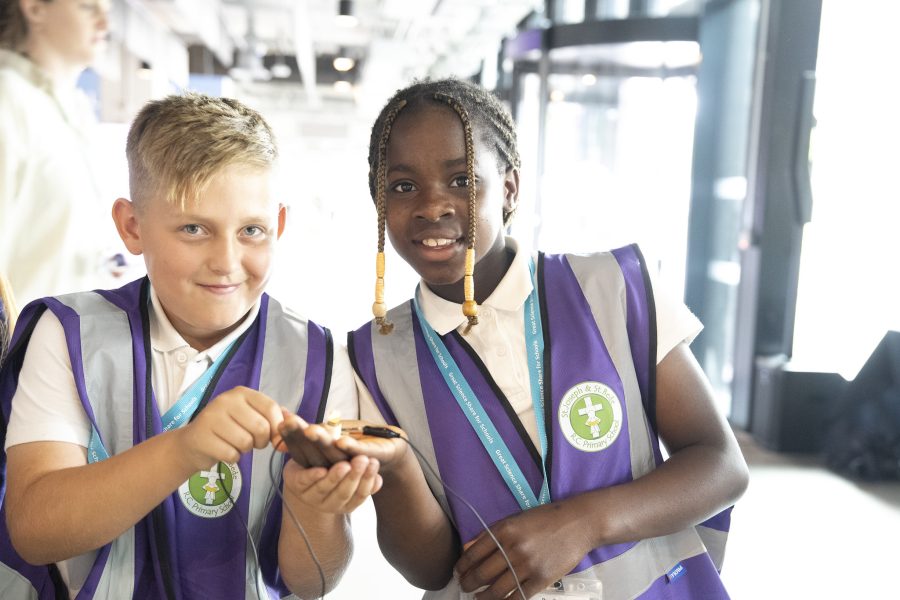
Inclusivity is central to the campaign and something that UNESCO also have recognised. Over the past four years, we have been awarded patronage of the UK National Commission for UNESCO. This is because GSSfS promotes participation from all teachers and pupils, regardless of where they are, prior attainment or background. Resources are being translated into different languages, in partnership with educators in countries across the world. We already have Spanish, Slovenian and Welsh, and we will soon have French too!
Schools frequently report high levels of engagement among pupils who may be less confident in traditional academic settings. This opportunity allows them to demonstrate strengths that are not always visible through conventional assessments.
So, what do the results show?
Following on from a report from 2019, GSSfS has once again worked with an external evaluation team (Impact-Ed) to assess the impact of the campaign on pupils. Data was collected from 448 pupils across six primary schools, with outcomes such as resilience (coping with setbacks), metacognition (awareness and management of one’s own thinking) and openness being measured and compared against comparison groups.
Visit www.greatscienceshare.org and sign up to become a member. This is free and allows you full access to all the resources, including:
As the Great Science Share for Schools enters its second decade, we continue to seek out teachers, partners and collaborators who can support this mission. Involvement of researchers in varied fields have been invaluable in supporting the development of inspirational resources, from Formula 1 technicians to quantum scientists, botanists and material scientists. If you are interested in working to profile your field of research, we’d be keen to find out more from you.
October 2026: Theme launch
February 2027: Four new Guided Enquiries launched
Feb – June 2027: Teacher professional development webinars
22nd June 2027: GSSfS Share Day (flexible to accommodate your contexts)
To all the advisors, collaborators, teachers and pupils who have supported the development of the campaign over the years.
[1] Great Science Share for Schools: https://www.greatscienceshare.org
[2] Archer L et al. (2015) ‘Science capital’: A conceptual, methodological, and empirical argument for extending Bourdieusian notions of capital beyond the arts. Journal of Research in Science Teaching 52: 922–948. doi: 10.1002/tea.21227
Scientists often need to communicate their subject to non-experts, such as policymakers and the public. This absorbing structured activity challenges…
Teachers are central to any effort to get more girls interested in STEM. Yet supporting them often comes second to supporting the students.

Science is becoming increasingly open. In this article, we show you how to make use of this and bring authentic research into the classroom.