Showing 10 results from a total of 315
September 7, 2026 | Issue 79
Science is becoming increasingly open. In this article, we show you how to make use of this and bring authentic research into the classroom.
Ages: <11, 11-14, 14-16, 16-19; Topics: General science, Physics, Science and society, Resources
September 7, 2026 | Issue 79
Gender stereotypes are deeply incorporated in our language. Large Language Models (LLM) could either amplify or fight these biases.
Ages: 11-14, <11, 16-19, 14-16; Topics: Careers in STEM, General science, Science and society, STEAM
June 11, 2026 | Issue 78
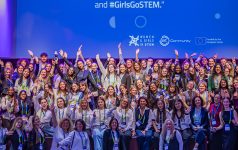
Teachers are central to any effort to get more girls interested in STEM. Yet supporting them often comes second to supporting the students.
Ages: 11-14, 14-16, 16-19; Topics: Science and society, Careers in STEM, Events, Resources
June 11, 2026 | Issue 78
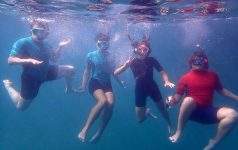
What does becoming a Blue School look like? Three European projects show how students investigate water and ocean issues.
Ages: 11-14, 14-16, 16-19; Topics: Earth science, General science, Science and society, Sustainability, Resources
June 11, 2026 | Issue 78
Cartoons are fun to watch but can also help inspire students and enhance their understanding of science. Here’s how to do that with some classics of European animation.
Ages: <11, 14-16, 11-14, 16-19; Topics: General science, Resources, Science and society
April 2, 2026 | Issue 77
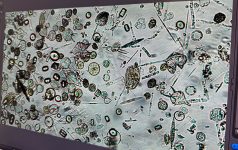
Turn your classroom into a marine science station and step into the lively world of plankton – tiny aquatic dancers under the microscope that quietly power food webs and even Earth’s ecosystems.
Ages: 14-16, 16-19; Topics: Biology, Earth science, Resources
April 2, 2026 | Issue 77
Exoplanets are planets orbiting stars beyond our Sun. Discovering them may answer one of the most asked questions: Are we alone in the universe?
Ages: 14-16, 16-19; Topics: Astronomy / space, General science, Mathematics, Physics, Resources, STEAM
February 3, 2026 | Issue 76
Students worldwide can win a life-changing opportunity to work at a real particle accelerator such as CERN, DESY or ELSA.
Ages: 14-16, 16-19; Topics: Events, Engineering, News from the EIROs, Physics
February 3, 2026 | Issue 76
Project Earth supports students to innovate for the planet with expert advisors and ‘Pitch for the Planet'. Take part!
Ages: 11-14, 14-16, 16-19; Topics: Earth science, Events, General science, Science and society, Sustainability
November 13, 2025 | Issue 75
Spice up your physics lessons and show your students the tremendous impact of physics research on medical innovations.
Ages: 14-16, 16-19; Topics: Biology, Careers in STEM, Chemistry, Health, Physics, Resources, Science and society