Bringing STEM to life: using LabXchange Narratives to inspire tomorrow’s scientists
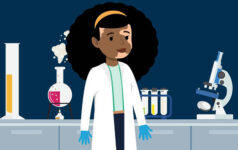
Super (role) models: Use stories about real scientists to inspire, build confidence, and help the next generation of innovators envision their place in STEM.
Showing 10 results from a total of 716
Super (role) models: Use stories about real scientists to inspire, build confidence, and help the next generation of innovators envision their place in STEM.
Live by your wits: group interviews based on disaster scenarios provide a fun opportunity to develop scientific literacy and transferable skills.
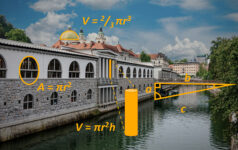
A maths field trip? Yes, really! MathCityMap transforms any space outside the classroom into an outdoor mathematical laboratory.
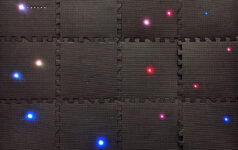
Written in the stars: use microcontrollers and LEDs to model stellar life cycles, scaling billions of years into minutes while exploring stellar evolution.

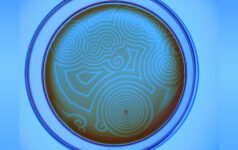
Tick tock: Did you know that there are secret clocks ticking inside living organisms, including us? Let’s dive into the science of biological oscillators.
All together now: discover how the collective behaviour of atoms, humans, and birds inspire researchers to make new light-emitting materials and devices.
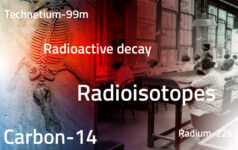
Safety first: nuclear decay and ionizing radiation can be safely studied in the physics classroom using the common baking ingredient potassium carbonate.
Try a project that blends chemistry, art, and peer learning, as secondary school students teach younger students how to create nature-inspired cyanotype prints.
How do scientists develop new materials for the computers of the future? Discover the rare magneto-electric properties of layered perovskites.
Stranger things: discover quantum computers, which are based on a new approach to computing powered by the strange behaviour of subatomic particles.
Bringing STEM to life: using LabXchange Narratives to inspire tomorrow’s scientists
Survival science: learning through group interviews
MathCityMap: take maths lessons out into the city
Wall of stars: illuminate stellar life cycles with physics and coding
Biological oscillations: the rhythms of living things
From birds to photons: collective phenomena in materials science
Exploring radioactivity safely with potassium carbonate
Adventures in cyanoprinting: where art and chemistry meet
Neutrons for the quantum technologies of the future: investigating layered perovskites
Quantum computing: is quantum mechanics the next computing superpower?