Showing 10 results from a total of 314
April 4, 2025 | Issue 72
Go with the flow: build a model using simple materials to convert the energy of water waves into electricity and explore key concepts relating to energy.
Ages: 14-16, 16-19; Topics: Engineering, General science, Physics
April 4, 2025 | Issue 72
Ready to rock: discover what mysterious belts of dust, ice, and rock around distant stars can tell us about the formation of planetary systems.
Ages: 11-14, 14-16, 16-19; Topics: Astronomy / space, Engineering, News from the EIROs, Physics
February 3, 2025 | Issue 71
Built to last: learn how researchers have developed a molecular delivery system for continuous release of an anti-HIV medicine.
Ages: 14-16, 16-19; Topics: Biology, Chemistry, Health, News from the EIROs, Physics, Science and society
February 3, 2025 | Issue 71
I’ve got the power: meet a simple device that can create a powerful sterilizing solution from just air, water, and electricity.
Ages: 14-16, 16-19; Topics: Chemistry, Engineering, Health, News from the EIROs, Physics, Science and society, Sustainability
February 3, 2025 | Issue 71
Strengthen knowledge in the subjects of energy supply, grid load, and data evaluation, while using 21st century skills in a fun way.
Ages: 16-19; Topics: Earth science, Engineering, Mathematics, Physics, Science and society, Sustainability
February 3, 2025 | Issue 71
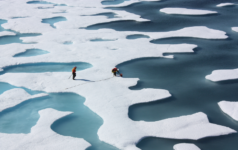
Under the Sun, light colours stay cool, while black heats up. But what does this mean for the natural world? Let's explore the consequences of albedo.
Ages: 14-16, 16-19; Topics: Earth science, Physics, Science and society, Sustainability
February 3, 2025 | Issue 71
Stacking up: use common household items like coins and paper explore one of the most significant scientific discoveries of the 19th century.
Ages: 14-16, 16-19; Topics: Chemistry, Engineering, Physics
November 4, 2024 | Issue 70
With flying colours: Try some simple but striking experiments to illustrate temporal additive colour mixing, and create and mix coloured shadows.
Ages: 11-14, 14-16; Topics: Biology, Chemistry, General science, Physics
November 4, 2024 | Issue 70
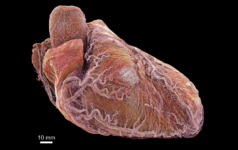
Heart of glass: a new X-ray scanning method reveals a full 3D view of the inside of the heart in incredible detail without having to cut into it.
Ages: 14-16, 16-19; Topics: Biology, Engineering, Health, News from the EIROs, Physics, Science and society
November 4, 2024 | Issue 70
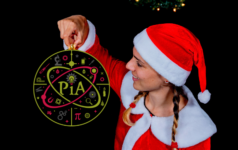
Each December, Physics in Advent (PiA) opens the door to 24 fun and thought-provoking physics experiments, with the chance to win cool prizes!
Ages: 11-14, 14-16, 16-19; Topics: Chemistry, Engineering, General science, Mathematics, Physics, Events, Resources