The hunt for Earth-like exoplanets and life in space heats up Inspire article
Author(s): Mićo Tatalović
Is our planet, and the life on it, unique? Several projects are being launched and planned to find out.
“Are we a fluke? Did we get really lucky to have this planet here that was perfect for life as-we-know-it to come about? Or are planets like Earth common?” wonders Clark Baker, an astronomer at the University of Cambridge, UK.
He is part of a new international project, lead by Swiss Nobel laureate Didier Queloz, which aims to answer these questions through what he calls the most boring experiment ever. They will have to observe the same stars every night for ten years to get enough data to provide answers.
Such long and seemingly mundane data collection could yield the most amazing discovery: the first planets just like Earth orbiting stars similar to our Sun. These Earth twins would then be studied for evidence of life by looking for molecules linked to life, such as water or oxygen, in their atmospheres. Scientists do this by studying the chemical makeup of a planet’s atmosphere through changes in starlight that passes through it. This could help us determine if there is alien life and how common it is.
NASA (National Aeronautics and Space Administration) sees the question of whether there is life beyond Earth to be one of the most profound of all time, the answer to which will change us forever.[1] Indeed, discovering life beyond Earth would have a significant effect on science and on human civilization more widely.
How would discovering Earth-like planets affect us?
It would change how we see ourselves and influence fields such as philosophy, religion and culture.
It would give new insights for biologists and chemists studying the origin of life. At the moment, despite many theories and evidence about how life might have started, we still only have a single case study: life on Earth, which makes it hard to determine which ideas and theories are most likely to be true. Finding another instance of life would help ground decades of research, dating back to the famous 1953 Miller-Urey lab experiment that suggested that the building blocks of life could have originated through chemical reactions from simple inorganic compounds during Earth’s prebiotic phase.[2]
It would boost astronomy research and efforts to develop new ways of studying distant planets and potential life forms, such as larger telescopes and space expeditions. For example, the educational organisation Initiative for Interstellar Studies with their Project Hyperion are working on technological concepts for a crewed interstellar starship.[3,4]
We have already seen a similar revolution in astronomy after 1995, when the first widely recognised exoplanet was discovered by Didier and his supervisor. That discovery provided concrete evidence to the idea that our universe might be teeming with planets, created a buzz and led to new research focus yielding thousands of new planet discoveries and innumerable insights about the nature of the universe. The excitement over exoplanet research and the possibility of life there has led to developments of new scientific instruments and space missions, and has also played a role in driving public interest and securing political and financial support for research.[5] It has also lead to the involvement of people in citizen science projects, which allow people to take part in research and even make real discoveries, such as Planet Hunters, and in amateur astronomy efforts, such as Exoplanet Watch.[5] And of course, research often leads to unplanned downstream benefits for society when its discoveries are put to use in other fields. For example, some astrophysics technology, such as high-energy optics used for developing mirrors for space-based telescopes, can be repurposed for accurate radiation treatment of tumors in medicine.[6]
Missing exoplanets
The first step in discovering life in space is knowing where to look. Many scientists think that our best bet is to search in solar systems like ours and on planets that are most similar to Earth, because we do know that life exists on at least one such planet: our own. It is a rocky planet situated in a so-called habitable or ‘Goldilocks’ zone around its host star, where the temperature is just right for liquid water to exist on the planet’s surface, which is thought to be crucial for life. Earth has all the ingredients that are thought to be necessary for life to emerge: liquid water, just enough energy coming in from the sun, and an abundance of the right chemicals needed for key biotic molecules, including carbon, nitrogen and phosphorous.[7]
But while astronomers estimate that there are 100 billion stars in our galaxy[8] and have discovered thousands of exoplanets,[9] none of them closely resemble the structure of our solar system with a Sun-like star orbited by rocky and gasous planets at distances we observe here.[10] This is partly due to the composition of the universe: most stars are red dwarfs, which have planets orbiting too close to them to be hospitable to life as we know it.[11] The red dwarfs are smaller and cooler than our Sun, which means planets need to be closer to them to be in a habitable zone, which then puts them in reach of harmful radiation that would likely kill off any life.[11]
Another reason we haven’t found any Earth-like planets yet is partly because of the limitations of our detection technologies, which make it hard to spot the small Earth-like planets at such large distances. Scientists use various techniques to detect exoplanets. The transit method detects the slight dimming of a star’s light when a planet passes between the star and Earth. The radial velocity methods detects the gravitational tug of a planet on its host star.[12] None of the methods are ideal for easily detecting Earth-like planets, which means that for most of the Sun-like stars that are closest to us, we still don’t know if they have any planets. This is about to change, with several missions being launched or planned to start in the next few years that should transform our understanding of exoplanets (see table 1). This is an increasingly important field for educators, with the ESA’s recent teaching resource being a good starting point.[13]
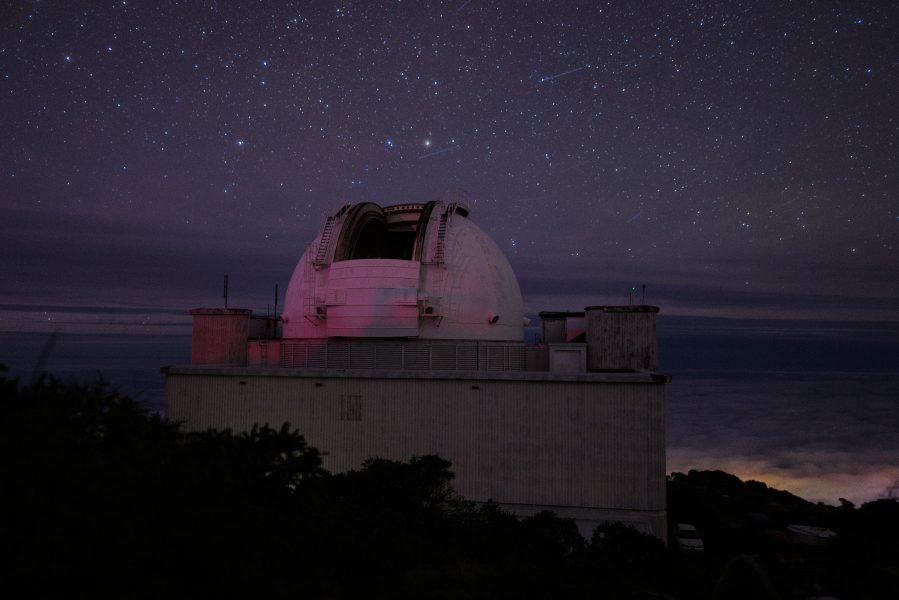
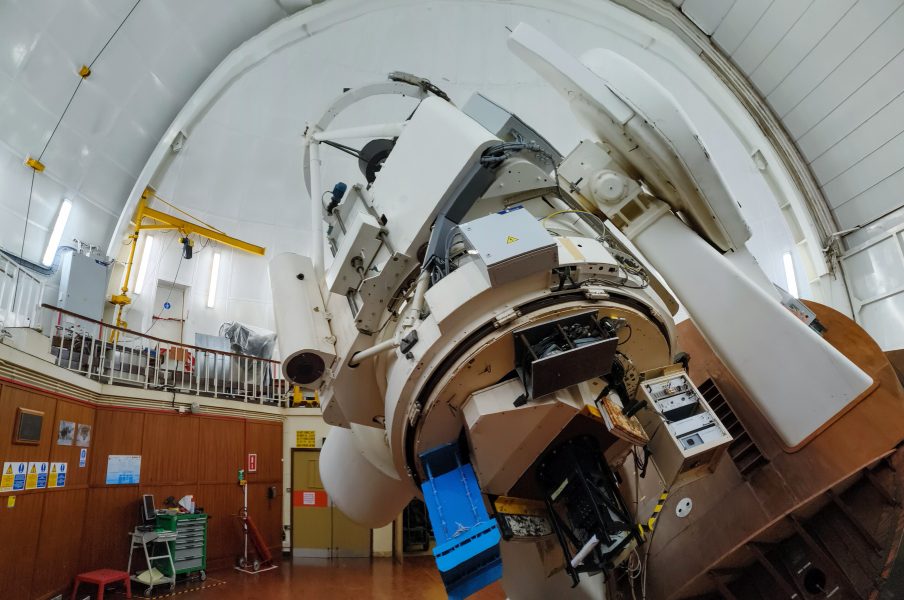
Automated spectrograph instrument, called High Accuracy Radial Velocity Planet Searcher 3, installed on a 2.5-meter diameter telescope on the Roque de Los Muchachos Astrophysical Observatory in Spain
Generating enough data from 50 stars over 10 years to detect the first ever Earth-twin orbiting another Sun-like star in the northern hemisphere
Next-generation extreme-precision radial velocity spectrograph installed at a 2.2-metre diameter telescope on La Silla European Southern Observatory in Chile
Survey 30 of the brightest solar-type stars visible from the southern hemisphere for 5 years in search of temperate terrestrial Earth-mass planets in the habitable zone
PLATO (Planetary Transits and Oscillations of stars)[16]
2027
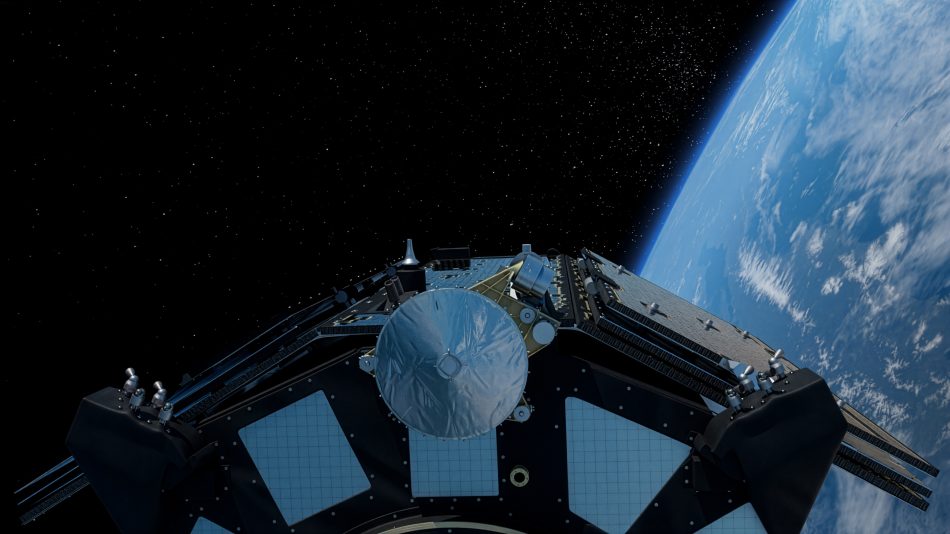
A satellite dubbed ‘terrestrial planet hunter’ equipped with 26 specialised cameras
Look for rocky planets around Sun-like stars with conditions similar to Earth as a starting point in search for life there
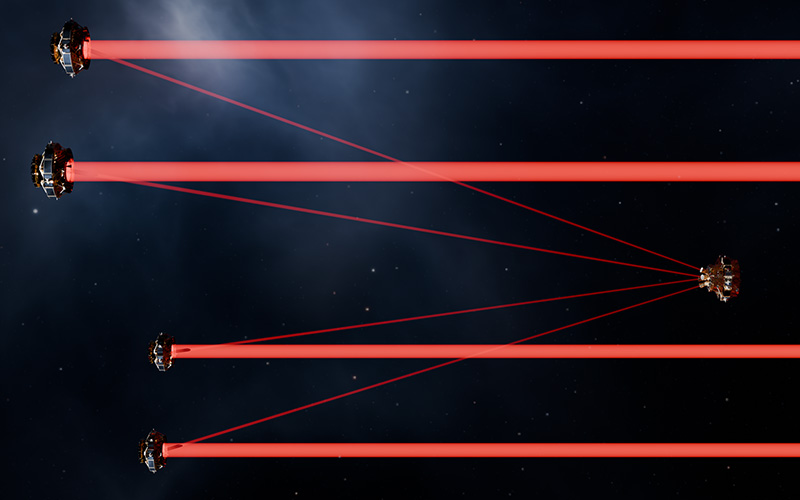
Four telescopes flying in rectangular formation with a specialised nulling interferometer instrument to cancel out noise from the stars to allow detection of signals from the planets
Directly detect dozens of nearby Earth-like exoplanets, characterise their atmospheres and use the data to calculate how common life is in the universe
Table 1: A selection of upcoming projects looking for Earth-like planets, and/or signs for life there
Such projects can show us how big discoveries demand a diverse set of competencies, huge amounts of rigorous data often collected by new or improved technological instruments, dedicated planning and financial support, as well as a lot of time. They can be a good starting point for discussing with your students how their image of science and scientists relates to the day-to-day reality of a researcher. Here are a few ideas for questions to start a conversation around this:
How many different disciplines do you think are involved in such an experiment?
What do scientists base their conclusions on?
Why do they need data and how do they collect it from such distant places?
How long do you think it takes to plan a project like the Extremely Large Telescope?
Do you know any examples, where a new technology developed for a scientific experiment ended up as something we would use in our daily life?
How do scientists get from a hypothesis such as ‘there is life beyond Earth’ to proving whether the claim is true or false?
Why is funding research and new scientific instrumentation important?
“Such projects are important because they allow us to gather the data needed to learn new things about the universe”, says Queloz. The Terra project, which he is leading, highlights a couple of key aspects of science: the need for new technology to make necessary observations, and the importance of a diverse team of people with different skills. He says, that such cutting-edge research is a collaborative endeavour that no single person can do on their own.
“Scientists don’t just think and make claims, but they collect evidence to inform their views. And getting data is tremendously difficult, and it needs the best people, the best innovation, and it needs money”, says Quelz. Without capability to collect the data, science is just nonsense or magic. “It’s not really fact-based”, he says.
These high-tech research projects and diligent data-collection are likely to move the debate over alien life from a sphere of magic into a factual knowledge over the next couple of decades.
Sarah Rugheimer, a research fellow at the School of Physics and Astronomy at the University of Edinburgh, Scotland, says that life on another planet is a near certainty, though we have no robust evidence to date. But she, like many others in the field, thinks such research projects could find compelling evidence in the next 5–25 years. If they do, it will be one of the most momentous scientific discoveries of all times.
Acknowledgements
Mićo Tatalović was visiting the University of Cambridge on a media fellowship funded by EMBO.
Mićo Tatalović is a science journalist and academic from Rijeka, Croatia, who lives and works in London, UK. He studied biological sciences at the University of Oxford and the University of Cambridge, and then science communication at Imperial College London, where he researched the role of comic books in communicating science. He has also completed the Knight Science Journalism fellowship at MIT, in Cambridge, Massachusetts, US, researching the use of artificial intelligence in science writing. His work experience includes news editing for SciDev.Net, New Scientist, Nature and Research Professional News.
”Faster, Higher, Stronger – Together”, the Olympic motto, could also apply to telescopes with a slight modification: “Bigger, Deeper, Sharper – Together”