

Articles
Showing 9 results from a total of 9
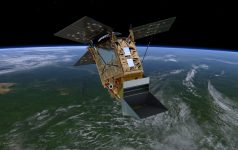
What can the colours on a satellite map actually tell us about the air we breathe?
Join us as we explore how the Copernicus Sentinel satellites detect gases such as nitrogen dioxide, and how chemistry helps us understand what’s happening in the atmosphere above us.
Ages: 14-16;
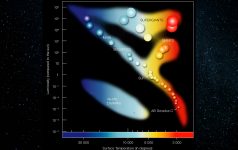
From notebook sketches to space-telescope data: explore how mapping starlight using the Herzsprung-Russell (H-R) diagram helps us trace the life stories of stars across the universe.
Ages: 14-16, 16-19;
A new short film explores the science behind gene therapies, with the help of five leading experts in the field and a unique, stop-motion animation.
Ages: 14-16, 16-19;
Students worldwide can win a life-changing opportunity to work at a real particle accelerator such as CERN, DESY or ELSA.
Ages: 14-16, 16-19;
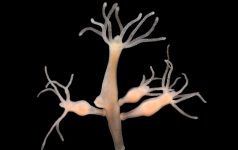
Amazing Hydra: A spineless creature with astounding regenerative properties that can adapt to changing environments.
Ages: 11-14, 14-16, 16-19;
Project Earth supports students to innovate for the planet with expert advisors and ‘Pitch for the Planet'. Take part!
Ages: 11-14, 14-16, 16-19;
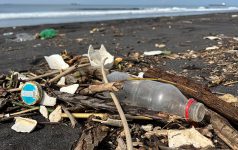
Every tide tells a story. Discover how waves, shells, and even litter reveal clues about marine life and our shared connection with nature.
Ages: 11-14, 16-19, 14-16;
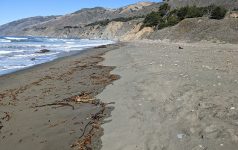
Turn a beach visit into a science adventure! Explore the animals, plants, shells, and even litter stranded on the beach to reveal the secrets of marine life and ocean dynamics.
Ages: 11-14, 14-16, 16-19;
| Issue 76
Eyes in the sky: tracking air pollution with satellites
Topics: Astronomy / space, Chemistry, Earth science, Science and society, Sustainability
 | Issue 76
A map of the stars
Topics: Astronomy / space
| Issue 76
Gene Horizons: a video introduction to the science behind gene therapies
Topics: Biology, Health
| Issue 76
The Beamline for Schools competition: connecting high school students to particle physics since 2014
Topics: Events, Engineering, News from the EIROs, Physics
| Issue 76
Measuring is believing: quantifying adaptation behaviour of Hydra
Topics: Biology, Health
| Issue 76
Project Earth: empowering young people to build a better world
Topics: Earth science, Events, General science, Science and society, Sustainability
| Issue 76
Sandy beaches: connecting land, ocean, and humans
Topics: Biology, Earth science, General science
| Issue 76
Sandy beaches: the window to the ocean
Topics: Biology, Earth science, General science