Showing 10 results from a total of 444
November 4, 2024 | Issue 70
Each December, Physics in Advent (PiA) opens the door to 24 fun and thought-provoking physics experiments, with the chance to win cool prizes!
Ages: 11-14, 14-16, 16-19; Topics: Chemistry, Engineering, General science, Mathematics, Physics, Events, Resources
November 4, 2024 | Issue 70
Visit the Xcool Lab for an inspiring experience at a cutting-edge research facility, with hands-on experiments to bring classroom concepts to life.
Ages: 16-19; Topics: Biology, Health, News from the EIROs, Physics, Science and society
October 31, 2024 | Issue 70
On a roll: a humble roll of toilet paper can be used in science experiments explore diverse topics in materials science, chemistry, and physics.
Ages: 11-14, 14-16, 16-19; Topics: Chemistry, Engineering, General science, Physics
September 2, 2024 | Issue 69
Spinning a yarn: explore the chemistry of wool and use it as a raw material for biobased products through simple hand-on activities.
Ages: 14-16, 16-19; Topics: Chemistry, Sustainability, Careers in STEM
September 2, 2024 | Issue 69
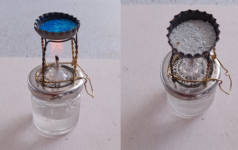
Learn how to do quantitative chemistry using microscale techniques with bottle tops and inexpensive spirit burners that are relatively easy and quick to set up.
Ages: 11-14, 14-16, 16-19; Topics: Chemistry, Sustainability
September 2, 2024 | Issue 69
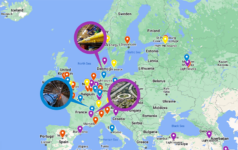
Did you know that there are more than 30 000 particle accelerators around the world? Where are they, and what are they for?
Ages: 11-14, 14-16; Topics: Careers in STEM, Engineering, General science, Physics, Science and society
September 2, 2024 | Issue 69
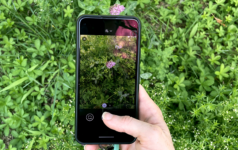
Small but mighty: investigate the role of herbaceous plants in the school garden for their contribution to biodiversity and sequestering carbon dioxide.
Ages: 14-16, 16-19; Topics: Biology, Earth science, Science and society, Sustainability
September 2, 2024 | Issue 69
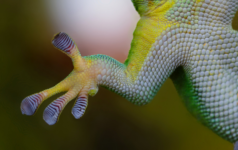
Learn from nature: biomimicry can be an inspiring interdisciplinary teaching tool that motivates students through engagement with real-world problems.
Ages: <11, 11-14, 14-16, 16-19; Topics: Biology, Careers in STEM, Engineering, Resources, Science and society, Sustainability, STEAM
September 2, 2024 | Issue 69
Discover five exciting projects from ESA and its ESERO network. Use space to motivate and enrich your lessons for out-of-this world STEM lessons!
Ages: <11, 11-14, 14-16, 16-19; Topics: Astronomy / space, Careers in STEM, Coding, Engineering, News from the EIROs, Physics, Resources, Sustainability
September 2, 2024 | Issue 69
Seeing is believing, but how can you be sure that what you see is real? Find out how to distinguish between real and fake astronomical images.
Ages: 11-14, 14-16, 16-19; Topics: Astronomy / space, Earth science, Mathematics, News from the EIROs, Physics, STEAM