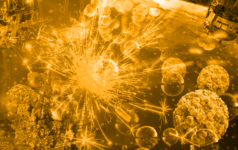
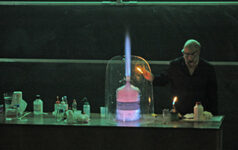
Water – Humanity’s Project is a CD-ROM containing a collection of about 300 pieces of media that examine water as an element of daily life as well as an important local and global issue. The collection is suitable for students and teachers of all levels.
Next year, I hope to take a small group of students, aged 15-18, to Iquitos in Peru, where we will board a boat to take us up the Amazon to study the rainforest. So I was particularly interested to see that Iquitos is featured in the Introduction to Ecosystems series of slides on Ecology, a media…
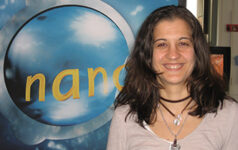
Originally, Nadia Salem wanted to become a research biologist and find a cure for cancer. Today, she is a reporter for Nano, a daily science magazine on German-language TV. Nadia talked to Marlene Rau about the unpredictability of life and the joys of being a science journalist.
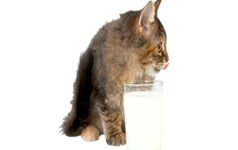
Dean Madden from the National Centre for Biotechnology Education (NCBE), University of Reading, UK, suggests an experiment to make lactose-free milk – useful both for cats and for the 75% of the world’s human population that are intolerant to this type of sugar.
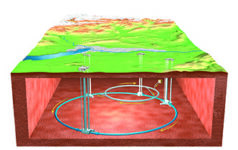
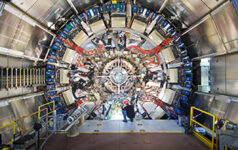
In the second of two articles, Rolf Landua from CERN takes us deep below the ground to visit the largest scientific endeavour on Earth – the Large Hadron Collider and its experiments.
On 10 September 2008 at 10:28 am, the world’s largest particle accelerator – the Large Hadron Collider – was switched on. But why? In the first of two articles, Rolf Landua from CERN and Marlene Rau from EMBL investigate the big unresolved questions of particle physics and what the LHC can…
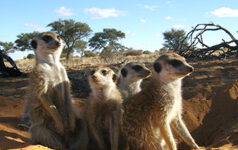
Mico Tatalovic from the University of Cambridge, UK, investigates the private lives of meerkats. Why do these small carnivores live in groups? Why do they feed each other’s pups, dig together and guard each other? And what makes a really good sentinel?
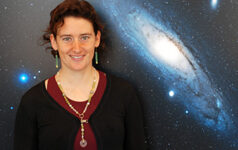
Can you play world-class sport, and also be part of a team that tries to understand the nature of our Universe? Yes – just ask Tamara Davis. Henri Boffin from ESO talked to her in Copenhagen, Denmark.
Ages: 14-16, 16-19; Topics: Astronomy / space, General science