Caroline Molyneux, from Balshaw’s Church of England High School, UK, explains how she kick-starts her classes and helps her students remember certain lessons, facts or concepts.
Ages: 11-14, 14-16, 16-19; Topics: Science and society, General science
Jenny List, a young particle physicist working at DESY in Germany, leads her own research group to find out how the Universe works. She talks to Barbara Warmbein.
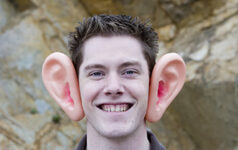
Do you have more than the average number of ears? Is your salary lower than average? When will the next bus arrive? Ben Parker attempts to convince us of the value of statistics – when used correctly.
Germany, like many other European countries, has difficulties attracting women into science. Diana Schimke from the University of Ulm, is working improve matters by putting schoolgirls directly in contact with women scientists.
Ages: 11-14, 14-16, 16-19; Topics: Science and society, General science
In Issue 3 of Science in School we invited you to join an international competition for school students and Catch a Star! Later, some of you helped to select winners by voting online for your favourite pictures. Douglas Pierce-Price from ESO reports on the results.
Do you or your students enjoy painting and drawing as well as teaching or learning science? Would you like to see your artwork reproduced 30,000 times and distributed across Europe? The Science in School cover competition gives you and your students the opportunity to do just that.
Linda Sellou, a French PhD student at Bristol University, UK, tells Sai Pathmanathan, a science education journalist, what she thought of her school science and what she’s up to now…
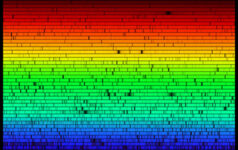
Take a CD and a cereal box, and what do you have? With a little help from Mark Tiele Westra, your very own spectrometer! Time to explore the delights of colour, hidden in the most prosaic of objects.
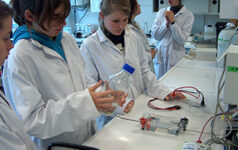
Teaching science in the classroom is all very well, but wouldn’t it be wonderful to let your students learn for themselves what it’s really like to work in a research laboratory? Sooike Stoops from the Flanders Institute for Biotechnology (VIB), Belgium, describes a project that does just…
Ages: 14-16, 16-19; Topics: Biology, General science