Nanotechnology in school
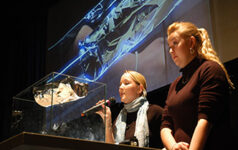
Matthias Mallmann from NanoBioNet eV explains what nanotechnology really is, and offers two nano-experiments for the classroom.
Showing 10 results from a total of 335
Matthias Mallmann from NanoBioNet eV explains what nanotechnology really is, and offers two nano-experiments for the classroom.
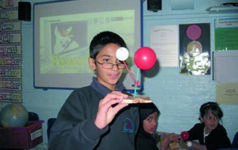
Wayne A Mitchell, Debonair Sherman, Andrea Choppy and Rachel L Gomes from the Next Generation project describe some of their science activities to introduce primary-school children to the science all around us.
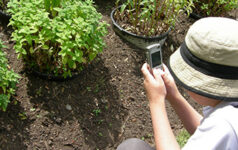
Sue Johnson from the Institute of Education, London University, UK, introduces the Plant Scientists Investigate project, and presents three plant-related activities for primary-school children. Compare the carbon dioxide concentrations of inhaled and exhaled air, visualise your own oxygen…
Dean Madden from the National Centre for Biotechnology Education (NCBE), University of Reading, UK, suggests an experiment to make lactose-free milk – useful both for cats and for the 75% of the world’s human population that are intolerant to this type of sugar.
Dudley Shallcross and Tim Harrison from Bristol University, UK, illustrate chemistry experiments relevant to climate change.
Anna Lorenc from the Volvox project explains the importance of the enzyme urease and presents a protocol to demonstrate urease activity in the classroom.
Laura Strieth, Karen Bultitude, Frank Burnet and Clare Wilkinson use drama and debate to encourage young people to discuss genetics and what it means for us all. Why not join in?
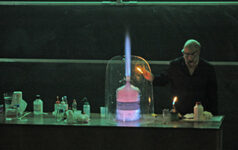
Herbi Dreiner and Tobias Strehlau describe how a university physics show inspired a secondary-school teacher and his students to perform their own school physics show. Why not try it in your school?
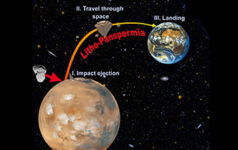
An enormous meteorite impact and then a rocky flight from Mars. Is that how life appeared on Earth? Cornelia Meyer takes us on a space trip through the lithopanspermia theory and describes how she is putting it to the test with the help of student colleagues.
Fred Engelbrecht and Thomas Wendt from the ExploHeidelberg Teaching Lab describe some experiments on sugar detection to demonstrate the problems that people with diabetes face every day.
Nanotechnology in school
Science for the Next Generation: activities for primary school
Planting ideas: climate-change activities for primary school
Better milk for cats: immobilised lactase used to make lactose-reduced milk
Practical demonstrations to augment climate change lessons
Investigating the action of urease
Meet the Gene Machine: stimulating bioethical discussions at school
Fun physics in school: students perform for students
Is there anybody out there? An ark of life
Detecting sugar: an everyday problem when facing diabetes