The social science of climate change
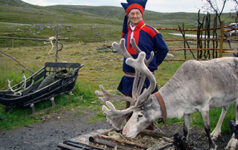
In Arctic regions, landscapes are changing fast. This has profound effects on their biological systems, but how are communities and their traditional lifestyles affected?
Showing 10 results from a total of 24
In Arctic regions, landscapes are changing fast. This has profound effects on their biological systems, but how are communities and their traditional lifestyles affected?
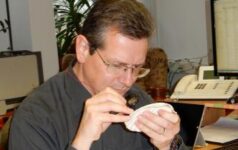
Seashells are more than just pretty objects: they also help scientists reconstruct past climates.
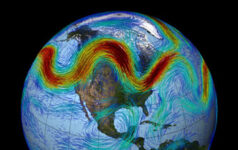
Reporting from the COP21 conference in Paris, we ask why ‘global warming’ can actually make the weather colder.
In the second of two articles, Dudley Shallcross, Tim Harrison, Steve Henshaw and Linda Sellou offer chemistry and physics experiments to harness the Sun’s energy and measure carbon dioxide levels.
Dudley Shallcross, Tim Harrison, Steve Henshaw and Linda Sellou offer chemistry and physics experiments harnessing alternative energy sources, such as non-fossil fuels.
Sue Johnson from the Institute of Education, London University, UK, introduces the Plant Scientists Investigate project, and presents three plant-related activities for primary-school children. Compare the carbon dioxide concentrations of inhaled and exhaled air, visualise your own oxygen…
Dudley Shallcross and Tim Harrison from Bristol University, UK, illustrate chemistry experiments relevant to climate change.
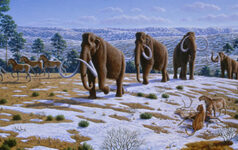
Climate change is nothing new. Caitlin Sedwick describes how a computer model is helping scientists to explain the extinction of the woolly mammoth.
Why not get your students to make their own predictions of climate change – with the help of Dudley Shallcross and Tim Harrison from Bristol University, UK?
The social science of climate change
Opening seashells to reveal climate secrets
Unexpected climate change
Looking to the heavens: climate change experiments
Fuelling interest: climate change experiments
Planting ideas: climate-change activities for primary school
Practical demonstrations to augment climate change lessons
What killed the woolly mammoth?
Climate change modelling in the classroom