
Science in School is published by EIROforum, a collaboration between eight of Europe’s largest intergovernmental scientific research organisations (EIROs). This article reviews some of the latest news from EIROs.
Ages: not applicable; Topics: News from the EIROs, Physics, Biology, Chemistry
Science in School is published by EIROforum a collaboration between eight of Europe’s largest inter-governmental scientific research organisations (EIROs). This article reviews some of the latest news from EIROs.
Ages: not applicable; Topics: News from the EIROs, Physics, Biology, Chemistry

Discovering how infectious diseases spread may seem purely a matter for medical science – but taking a close look at the numbers can also tell us a great deal.
Ages: 11-14, 14-16; Topics: Mathematics, Biology, Health
The basic chemistry of hair dyes has changed little over the past century, but what do we know about the risks of colouring our hair, and why do we do it?
Ages: 14-16, 16-19; Topics: Chemistry, Science and society
Is it possible to pass cancer from one individual to another? For some animals, it is – and, sadly, a unique Tasmanian species is facing possible extinction as a result.
Science in School is published by EIROforum, a collaboration between eight of Europe’s largest inter-governmental scientific research organisations (EIROs). This article reviews some of the latest news from EIROs.
Ages: not applicable; Topics: News from the EIROs, Physics, Biology, Chemistry
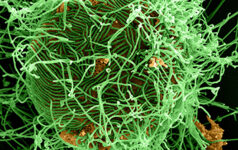
When thinking about diffraction studies, X-rays most often come to mind, but neutrons can also provide important structural information – and could help in the fight against HIV.
Ages: 14-16, 16-19; Topics: Physics, Biology, Chemistry, Health