Build your own virtual accelerator
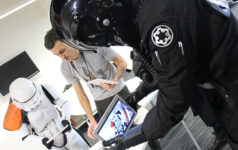
Build your own virtual particle accelerator with the aid of the acceleratAR app and gain a hands-on, immersive understanding of how these machines work.
Showing 10 results from a total of 335
Build your own virtual particle accelerator with the aid of the acceleratAR app and gain a hands-on, immersive understanding of how these machines work.
Not just melting ice: a simple experiment demonstrates how thermal expansion contributes to rising sea levels as one of the consequences of climate change.
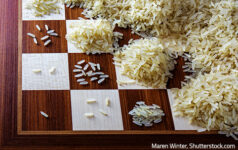
Exponential growth has become part of daily life during the COVID-19 pandemic. These simple exercises help explain this tricky concept
The COVID-19 pandemic has shone a spotlight on exponential growth. This provides an opportunity to teach this tricky concept in a real-world context.
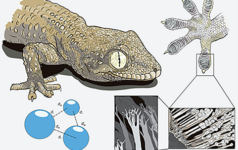
Engaging with biomimetic design encourages students to explore the principles of form and function in relation to evolutionary adaptation.
Integrate key principles from biology, chemistry, and engineering with a set of experiments based on bioluminescence.
How can air hold the water in an upturned glass? Why does water stay in a bottle with a hole in its base? Find out with these entertaining experiments.
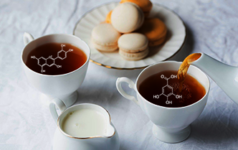
Tea is a refreshing drink – and it can also help students to learn about important chemical reactions, as these simple experiments with infusions demonstrate.

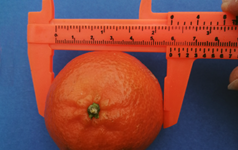
Have fun with fruit while helping your students to explore the concepts of area and volume, and learn more about their real-world applications.
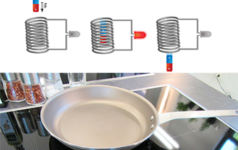
Explore electromagnetic induction and of one of its well-known applications – the induction hob – with these hands-on activities.
Build your own virtual accelerator
An ocean in the school lab: rising sea levels
Exponential growth 1: learn the basics from confetti to understand pandemics
Exponential growth 2: real-life lessons from the COVID-19 pandemic
Biomimicry: linking form and function to evolutionary and ecological principles
Bioluminescence: combining biology, chemistry, and bionics
Fantastic feats: experimenting with water
Tea-time chemistry
Maths with fruit
Faraday’s law of induction: from classroom to kitchen