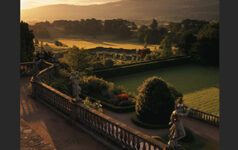
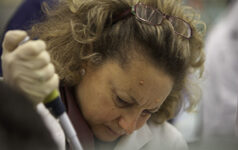
As Head Conservator at the National Trust, Katy Lithgow’s education turned her into ‘more an arts person’ than a scientist – but her work has shown how the two can be inextricably linked. Vienna Leigh finds out how.
Jeanne Keweloh is a substitute teacher, going wherever she is needed to share her passion for science. She tells Sonia Furtado about the ups and downs of teaching on the move, and shares some of her strategies.
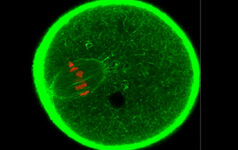
From jellyfish to arsenic detectors via a Nobel Prize: Sonia Furtado reports on the discovery and development of the green fluorescent protein, and interviews scientists at the European Molecular Biology Laboratory (EMBL) in Heidelberg, Germany, about its applications.
Ages: 16-19; Topics: Biology, General science, Science and society
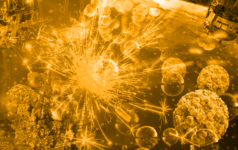
Halina Stanley describes how two Israeli scientists investigated plasma balls and in the process found a potentially useful way to create nanoparticles.
In this issue’s feature article, Leroy Hood, the ‘father of systems biology’ describes his commitment to encouraging concept-driven, hands-on science teaching. He explains how he introduced this approach across schools in Seattle – and why his achievements in science may be due to his…
In the second of two articles, Dudley Shallcross, Tim Harrison, Steve Henshaw and Linda Sellou offer chemistry and physics experiments to harness the Sun’s energy and measure carbon dioxide levels.
Lucy Patterson spoke to Greek science teacher Theodoros Pierratos, who recently won the chance to bring physics to life for his students in a truly extraordinary way with the help of the European Space Agency.
Ages: 14-16, 16-19; Topics: Physics, Astronomy / space