Health and disease are themes that run through this issue of Science in School. In our feature article, Alan Leshner describes his varied career, including his involvement in a major campaign to show that schizophrenia is a brain disease and not a result of environment. In contrast to this concern…
Malcolm Fridlund from the European Space Agency (ESA) describes the search for extra-solar planets and explains how they can help us to understand the origin of life on Earth.
Ages: 14-16, 16-19; Topics: Physics, Chemistry, Astronomy / space
The vast majority of chemists with whom I come into contact recall that the first experiences that excited them about chemistry were either seeing or doing practical work.
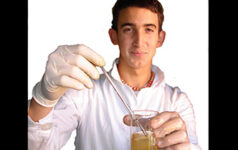
We’ve all heard that an antioxidant-rich diet is healthy. Together with his students, Gianluca Farusi compared the antioxidant levels in a range of foods and drinks.
How better to inspire thousands of schoolchildren across Europe than by motivating and educating their teachers? As Eleanor Hayes explains, that is the idea behind Science on Stage – a network of local, national and international events for teachers.
Research offers exciting and challenging job opportunities, but sometimes the price to pay in terms of personal sacrifice is very high. Claudia Mignone interviews a young astronomer who found satisfaction in the classroom – teaching mathematics.
Giuseppe Zaccai from the Institut Laue-Langevin (ILL) in Grenoble, France, describes how he and his co-workers have uncovered a way to explore water dynamics in the cell interior using neutron scattering and isotope labelling.
Ages: 16-19; Topics: Physics, General science, Biology, Chemistry, Science and society
Why is science important? “It helps us find out what on Earth is going on.” “It can lay the groundwork for a great career.” “It is our best chance for tomorrow.” “It provides us with opportunities and choices.” These and more statements can be found on Alom Shaha’s webpage, Why is…