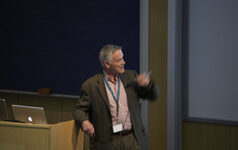
Dr Alan Leshner, Chief Executive Officer of the American Association for the Advancement of Science (AAAS) and Executive Publisher of the renowned Science magazine, tells Marlene Rau and Sonia Furtado about his varied career and shares his views on science education issues.
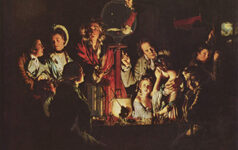
Do you enjoy the drama of science? The colour, the smells, the intricacies? Why not follow science teacher Bernhard Sturm’s suggestions: let your students bring yet more drama into the classroom by (re-)enacting science, to help them visualise and remember the lesson.
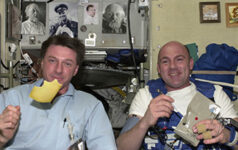
How do astronauts eat, sleep and wash? Can you get ‘seasick’ in space? In the second of two articles about the ISS, Shamim Hartevelt-Velani, Carl Walker and Benny Elmann-Larsen from the European Space Agency investigate.
Whynotchemeng.com is an excellent website designed for students who are considering a career in chemical or biochemical engineering. The website has two particular strengths: careers information, and a resource of practical demonstrations designed to inspire potential young physical scientists and…
Luis Peralta, professor at the University of Lisbon’s physics department, and Carmen Oliveira, physics and chemistry teacher at Casquilhos High School in Barreiro near Lisbon, describe the ‘Environmental radiation’ project, in which students become actively and enthusiastically involved in…
Ages: 11-14, 14-16, 16-19; Topics: Physics, Earth science, Science and society, General science
Leroy Hood talks to Marlene Rau, Anna-Lynn Wegener and Sonia Furtado about his long-standing commitment to innovative science teaching, and how he came to be known as the father of systems biology.
Ages: 16-19; Topics: Biology, General science, Science and society