Van Gogh’s darkening legacy
The brilliant yellows of van Gogh’s paintings are turning a nasty brown. Andrew Brown reveals how sophisticated X-ray techniques courtesy of the…
Physics, Chemistry





What makes emerald green fade in famous paintings? Scientists at ESRF study how colours fade.
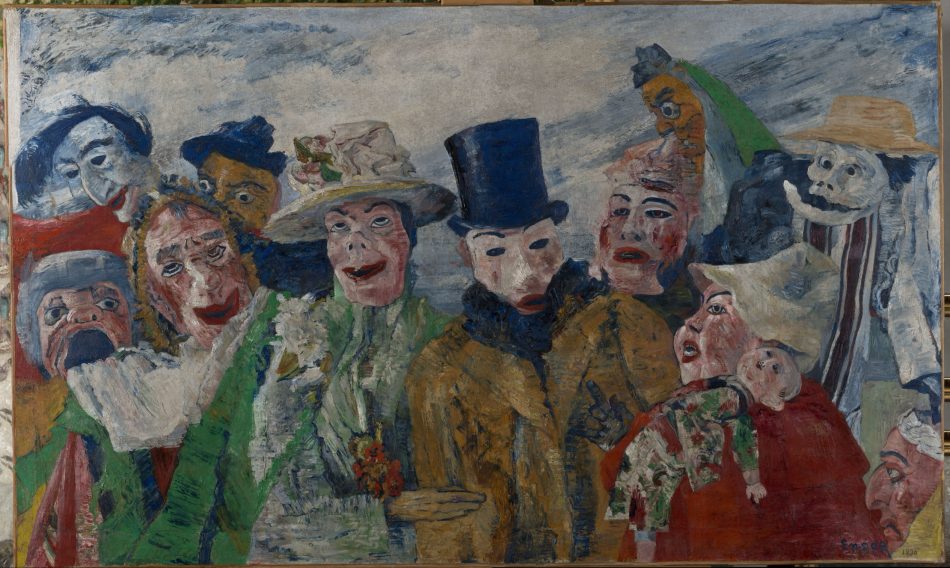
Why do some bright green areas in 19th-century paintings turn dull, crack, or even flake away? For years, conservators had suspected that the once popular pigment emerald green might be to blame. Now, scientists have identified exactly how light and humidity trigger its degradation.[1]
During the 19th century, advances in industrial chemistry led to the creation of new synthetic pigments.[2] One of the most striking was emerald green, a vivid copper arsenite compound that is prized for its intense colour.
Artists such as Paul Cézanne, Claude Monet, Vincent van Gogh, Edvard Munch and Robert Delaunay used this pigment in their works.[1] However, some artists noticed that the colour did not remain stable over time. Green areas could darken, lose their brilliance, or develop surface cracks. Later, scientists confirmed that emerald green is highly toxic due to its arsenic content.[3] But what exactly causes this deterioration?
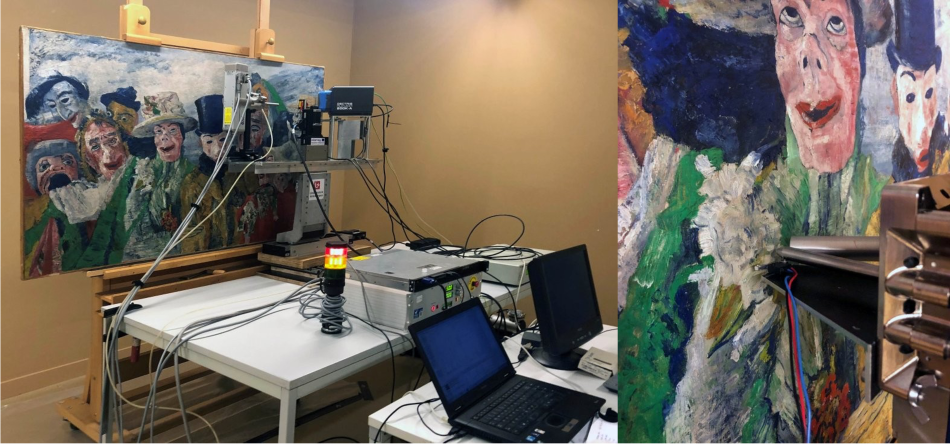
To answer this question, researchers from several European institutions examined both laboratory paint samples and real artworks. A key case study was The Intrigue (1890) by James Ensor, housed at the Royal Museum of Fine Arts in Antwerp.[1]
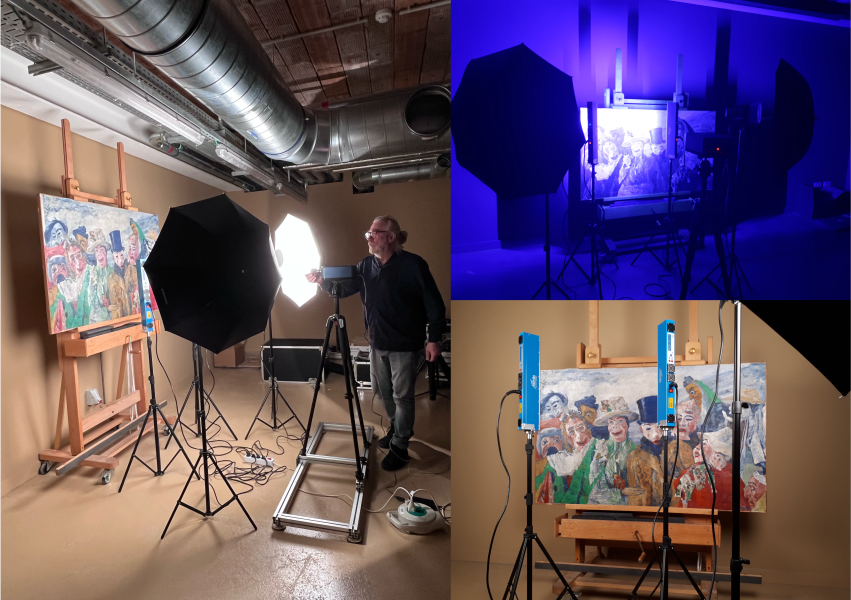
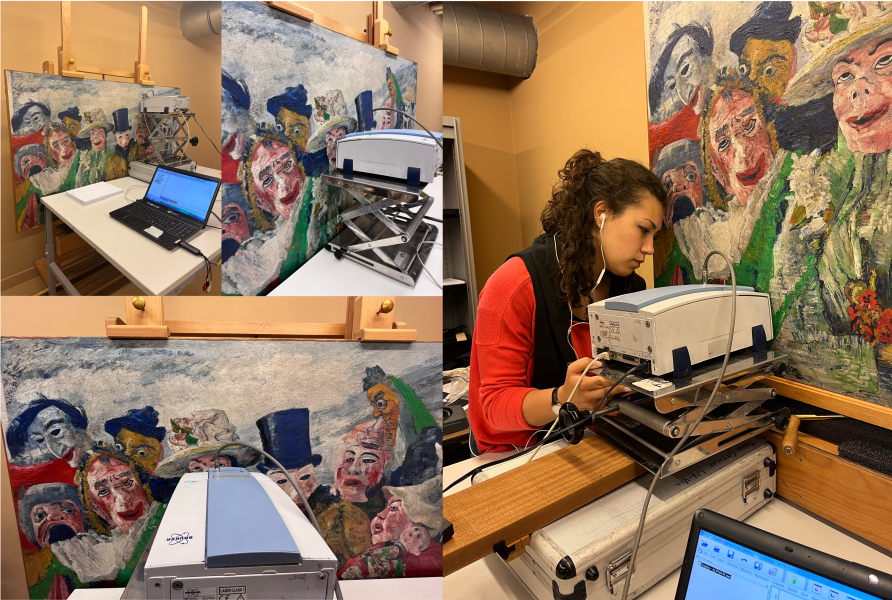
First, scientists performed non-invasive measurements directly on the painting. Using portable instruments provided by the University of Antwerp and the European mobile heritage science laboratory, MOLAB, they analysed the green areas without removing any material. These measurements helped them to identify where to take microscopic samples for further study.
The tiny samples were then analysed using synchrotrons at large-scale research facilities, including the European Synchrotron Radiation Facility (ESRF) and the German Electron Synchrotron (Deutsches Elektronen-Synchrotron, DESY) in Germany. Synchrotrons produce extremely bright X-rays, enabling scientists to identify chemical compounds at micrometre and even sub-micrometre scales.
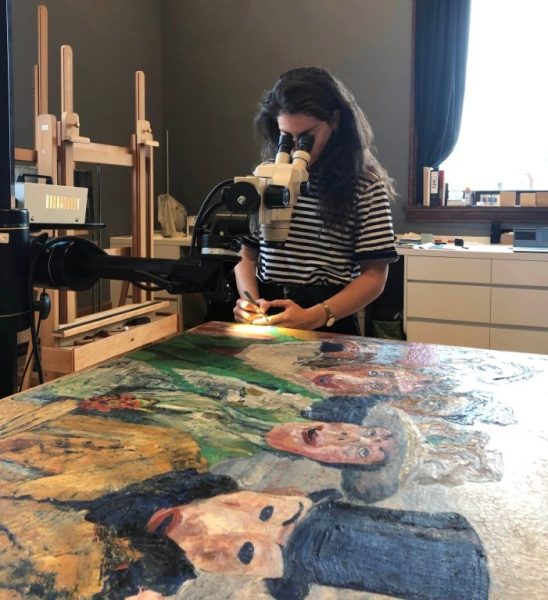
As artists’ paints are chemically complex mixtures, the team employed several techniques, including X-ray diffraction and X-ray absorption spectroscopy. This multi-method approach allowed the team to determine how arsenic changes form within the paint layers.
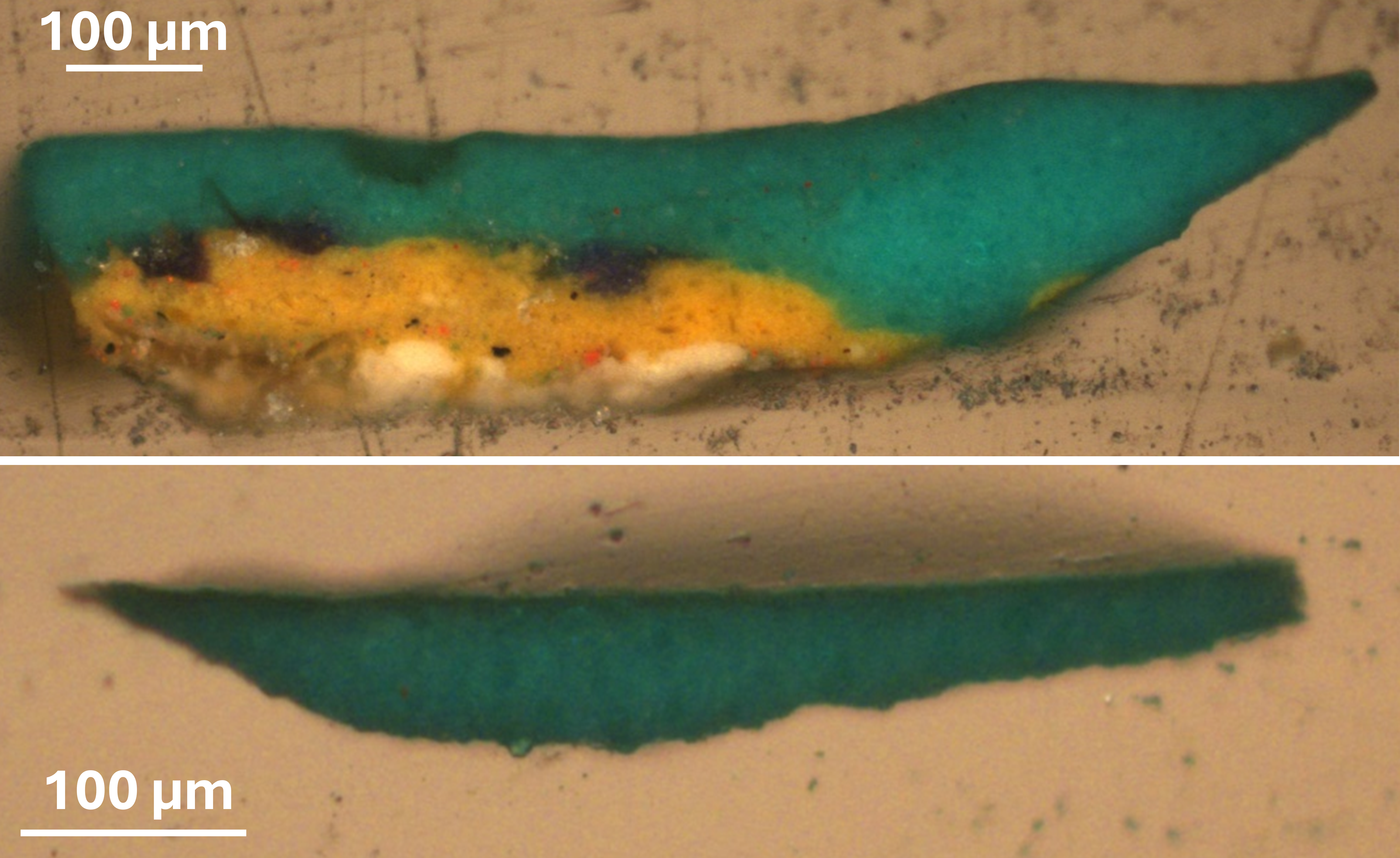
The researchers discovered that light and humidity affect emerald green in different ways.[1] Humidity promotes the formation of arsenolite (As2O3), a crystalline arsenic compound. This makes the paint brittle and prone to flaking. Light triggers a chemical reaction in which arsenic is oxidised from a trivalent to a pentavalent state. This reaction produces a thin, whitish surface layer that dulls the original green colour.
When the team compared artificially aged laboratory samples with microscopic cross-sections from the aforementioned study (The Intrigue), they found strong similarities. The results indicate that photo-oxidation (i.e. degradation caused by light) poses the greatest long-term threat to the paintings.
The study also highlights an important practical point: visual inspection alone is not sufficient to assess the condition of emerald green paint. Subtle chemical changes may occur before dramatic colour shifts are visible.
The researchers demonstrated that ‘external reflection infrared spectroscopy’ can be used directly in museums to non-invasively detect pentavalent arsenic compounds. This technique helps conservators to identify areas at risk and determine when micro-sampling and more advanced X-ray analyses are necessary.
Understanding the chemistry of historical pigments not only helps preserve cultural heritage, but also provides an opportunity to connect art, chemistry, and material science in the classroom.
At ESRF, the scientists used two key X-ray techniques on tiny samples of emerald green taken from the painting:
Together, these techniques allow scientists to map the composition of paint layers at tiny scales and identify subtle changes that can’t be seen with the naked eye.
[1] Carboni Marri S et al. (2025) Discovering the dual degradation pathway of emerald green in oil paints: The effects of light and humidity. Science Advances 11. doi: 1126/sciadv.ady1807
[2] A downloadable handbook describing the history, characteristics, and scientific analysis of 10 artists’ pigments: https://www.nga.gov/research/publications/artists-pigments-handbook-their-history-and-characteristics-volume-3
[3] Russick S et al. (2025) Toxic Tales: Arsenic’s Legacy in Nineteenth-century Green Book Bindings at Northwestern University Libraries. Studies in Conservation 70: 745–761. doi: 10.1080/00393630.2025.2460403
[4] X-ray diffraction explained: https://www.esrf.fr/home/UsersAndScience/Experiments/ID19/Techniques/Diffraction/Overview.html
[5] X-ray absorption spectroscopy explained: https://www.esrf.fr/UsersAndScience/Experiments/CRG/BM14/Xafs

The brilliant yellows of van Gogh’s paintings are turning a nasty brown. Andrew Brown reveals how sophisticated X-ray techniques courtesy of the…
Applying high-tech science to the study of ancient art and famous paintings has been a rewarding career choice for synchrotron scientist Marine…


The PDB Art project aims to make science more accessible and inspire young people to explore the beauty of proteins by bringing together art and…