Sandy beaches: connecting land, ocean, and humans
Every tide tells a story. Discover how waves, shells, and even litter reveal clues about marine life and our shared connection with nature.
Biology, Earth science, General science




Where does plastic go when we can no longer see it? Follow one plastic bag as it crumbles into invisible particles and see where it ends up.
A plastic bag left on a city street doesn’t necessarily remain intact. Sunlight and physical abrasion can gradually wear it down, breaking the plastic into smaller pieces. Some fragments eventually become too small to see, but they remain in the environment. Being invisible doesn’t mean they’ve disappeared, and figuring out where these hidden particles go is a scientific challenge in its own.
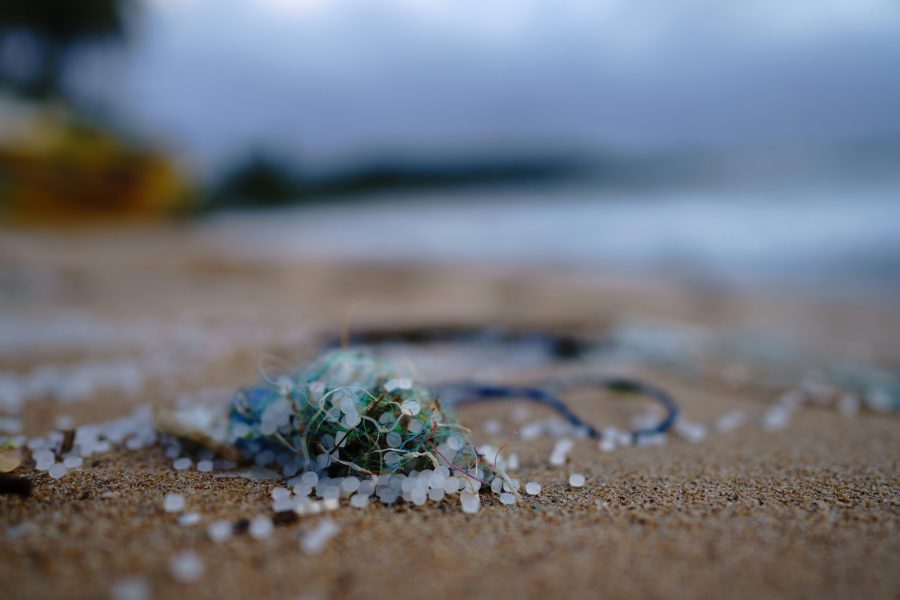
Plastics are everywhere because we produce so many of them: global production has risen from around 2 million tonnes in the 1950s to over 450 million tonnes today (figure 1).[1] As large plastic items break down, they form microplastics: fragments made of different polymers (long-chains of molecules that make up plastics) measuring less than 5 millimetres in diameter, about the width of a pencil lead.[2,3]
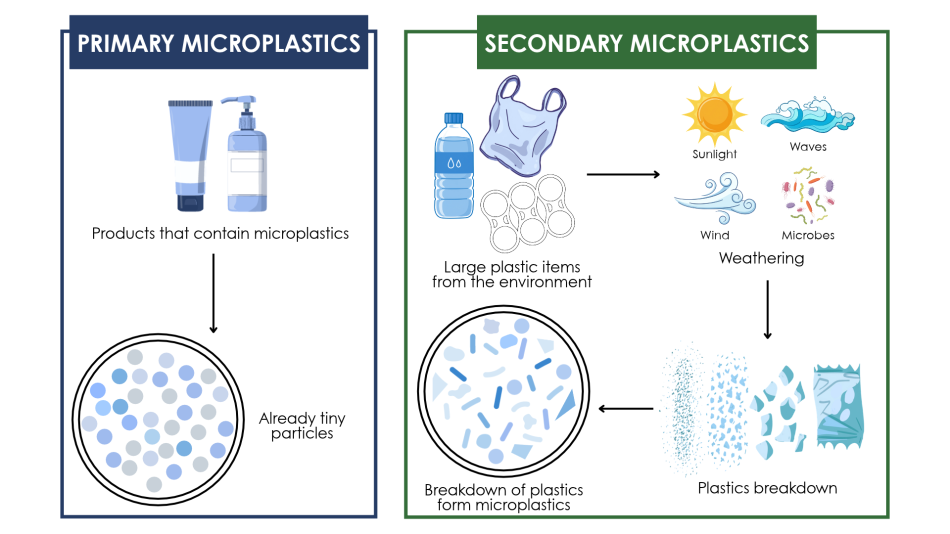
The breakdown happens mainly through weathering. Sunlight, waves, wind and even microbes gradually weather plastic through physical, chemical and biological processes, splitting large pieces into increasingly smaller fragments.[3] Sunlight is often the fastest of these processes.[4] Microplastics formed from larger objects are called secondary microplastics, while those manufactured to be small, such as the microbeads once used in personal care products, are called primary microplastics (figure 2). Among the two, secondary microplastics are far more common.[2,4]
Once these particles form, where do they go? People often discard packaging on the ground or in waterways, where surface runoff carries it into rivers and lakes.[5] Rivers are a major source of microplastics entering the sea.[3] Some particles also pass through wastewater treatment plants, while others are worn off car tyres through friction with the road or shed from synthetic clothes each time they are washed.[4]
Seawater has a density of about 1.02 g/cm3, and a plastic’s density helps determine its fate: less dense plastics float and can travel long distances, while denser ones sink and settle into sediments.[3,6] Scientists suggest that the ocean floor is the final resting place for much of this material.[4]
A single plastic bag can leave a trail spanning a city street, a river, a coastline and the deep sea. But before scientists can follow that trail, they must assure they can recognise a microplastic when they see one.
Not every particle that looks like plastic is actually made of plastic. In a recent study, only about 30% of particles visually identified as potential microplastics were confirmed to be plastic.[5] Scientists therefore analyse collected samples to identify and characterise suspected microplastics.
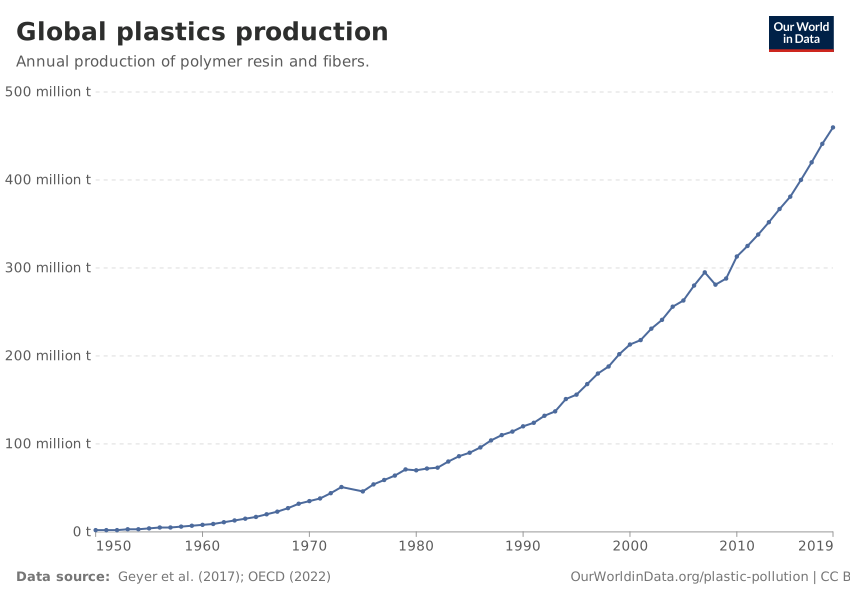
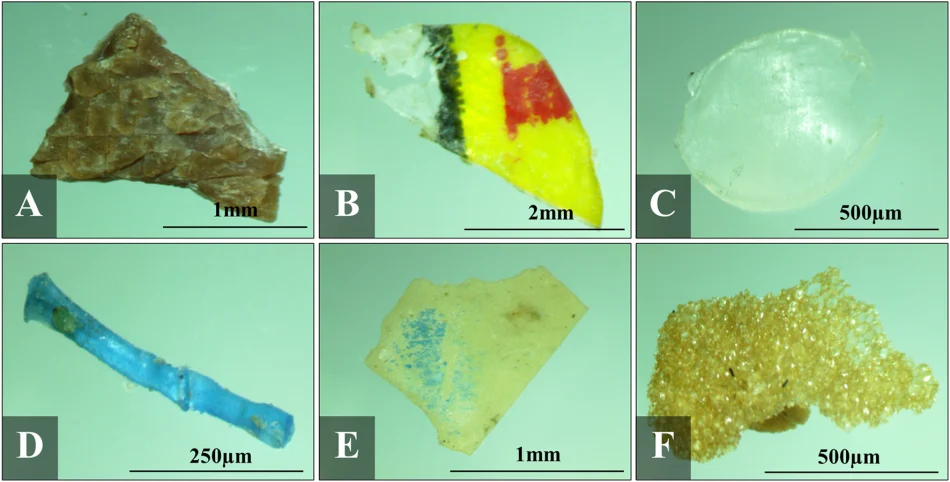
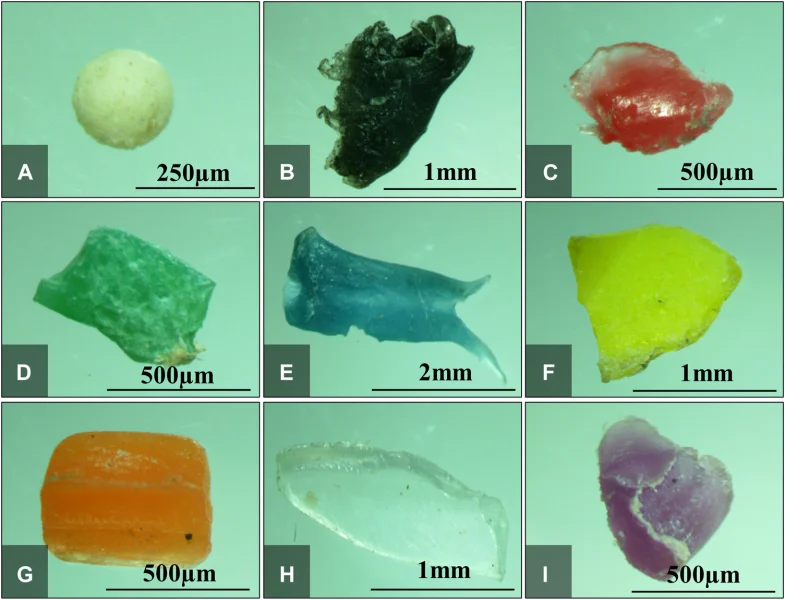
First, they collect a sample from water, sand, or even fish, remove the organic material surrounding the particles, and filter what remains.[5,7] Next, they examine the particles under a microscope, count them, and record their shape (figure 3) and colour (figure 4).[5,7]
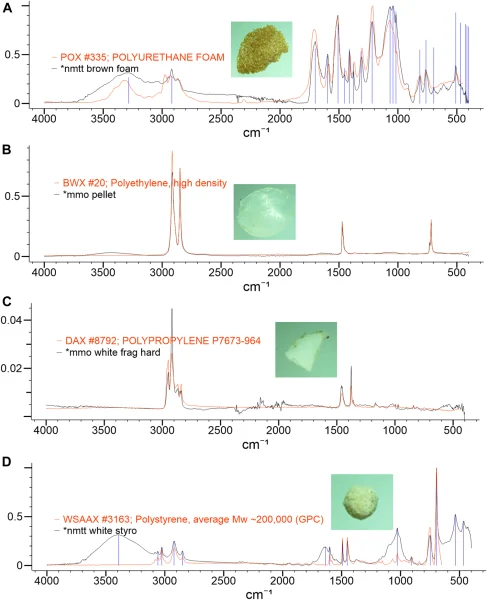
But a microscope cannot reveal what a particle is made of. To find out, scientists use Fourier-transform infrared (FTIR) spectroscopy. Different polymers absorb infrared light in distinctive patterns, creating chemical fingerprints. The instrument reads the pattern and compares it with a ‘fingerprint’ library of known polymers.[3,5] This is like matching a fingerprint found at a crime scene: scientists compare the pattern with a reference to help identify the polymer (figure 5). Very small particles are more difficult to identify. Below a tenth of a millimetre, FTIR can sometimes struggle, which is why scientists continue to improve their methods using instruments that provide finer spatial resolution, such as micro-FTIR and Raman spectrometry.[3]
A Fourier transformation is a mathematical transformation that helps translating the data created by FTIR spectroscopy into a more visually appealing spectrum. This transformation makes it easier for scientists to analyse the data and recognise distinct patterns from different molecules.
We have traced microplastics through aquatic environments and seen how scientists identify them. But why does this matter? As these particles move through marine ecosystems, they can come into contact with organisms,[6,8,9] becoming part of ecological processes that scientists are still trying to understand. Tracing their journey helps scientists to learn not only where microplastics go, but also how human-made materials interact with aquatic ecosystems.
In a 2024 study, researchers collected fish from public wet markets in eight municipalities in Cebu Province, Philippines, and tested their edible tissues for microplastics.[5] They found 389 particles across all 11 fish species. To confirm the particles’ composition, they used the same two-step method described above: microscopy followed by FTIR. The results showed that polyvinyl alcohol (PVA), polyacetylene (PA) and polyvinyl chloride (PVC) were the most common polymers in the samples. Particles appeared in both bottom-dwelling and open-water fish, supporting the idea that microplastics travel throughout the water column.[5]
In a separate study, researchers found microplastics in staple foods purchased from local wet markets and supermarkets in the Philippines, including sea salt, sugar, fish sauce and even cooked rice. Sea salt alone contained about 470 particles per kilogram.[10]
Fish from the wet market, salt in the kitchen and rice on the plate: the journey of plastic ends closer to home than we might think, making research on microplastics personal. Researchers are now testing the questions they ask in laboratories in Philippine coastal environments, and the answers connect environmental pollution to the food on local tables.
Plastic doesn’t disappear when it breaks down into tiny particles. Keeping plastic waste out of the environment can reduce the amount that eventually reaches rivers and the sea.
Next time you see a plastic bag or other plastic litter on the street, pick it up if it’s safe and dispose of it properly. Even small actions can help keep plastic waste out of our waterways.
[1] Hannah Ritchie, Veronika Samborska, and Max Roser (2023) – “Plastic Pollution” Published online at OurWorldinData.org: https://ourworldindata.org/plastic-pollution
[2] Realdon G (2015) Microplastics: small but deadly. Science in School 34.
[3] Wu C, Zhang K, Xiong X (2018) Microplastic pollution in inland waters focusing on Asia. In Wagner M, Lambert S (eds) Freshwater Microplastics: The Handbook of Environmental Chemistry pp 85–99. Springer. ISBN: 978-3-319-61615-5
[4] Hale RC et al. (2020) A global perspective on microplastics. Journal of Geophysical Research: Oceans 125: e2018JC014719. doi: 10.1029/2018JC014719
[5] Alburo HM et al. (2024) Occurrence, characterization, and hazard assessment of microplastics in edible tissues of commercial fishes from public wet markets in Cebu Province, Philippines. International Journal of Aquatic Biology 12: 309–320. doi: 10.22034/ijab.v12i4.2331
[6] Ziani K et al. (2023) Microplastics: a real global threat for environment and food safety: a state of the art review. Nutrients 15: 617. doi: 10.3390/nu15030617
[7] Osorio ED, Tanchuling MAN, Diola MBLD (2021) Microplastics occurrence in surface waters and sediments in five river mouths of Manila Bay. Frontiers in Environmental Science 9: 719274. doi: 10.3389/fenvs.2021.719274
[8] Deepthimahanthi D et al. (2025) Physiological effects of microplastic on marine organisms. Cuestiones de Fisioterapia 54: 1618-1634. doi: 10.48047/0vp5gk46
[9] Cole M et al. (2011) Microplastics as contaminants in the marine environment: A review. Marine Pollution Bulletin 62: 2588–2597. doi: 10.1016/j.marpolbul.2011.09.025
[10] Espiritu EQ et al. (2024) Microplastics contamination in selected staple consumer food products. Journal of Food Science and Technology 61: 2082–2092. doi: 10.1007/s13197-024-05978-2
[11] Chartres N et al. (2024) Effects of microplastic exposure on human digestive, reproductive, and respiratory health: A rapid systematic review. Environmental Science & Technology 58: 22843–22864. doi: 10.1021/acs.est.3c09524
Every tide tells a story. Discover how waves, shells, and even litter reveal clues about marine life and our shared connection with nature.
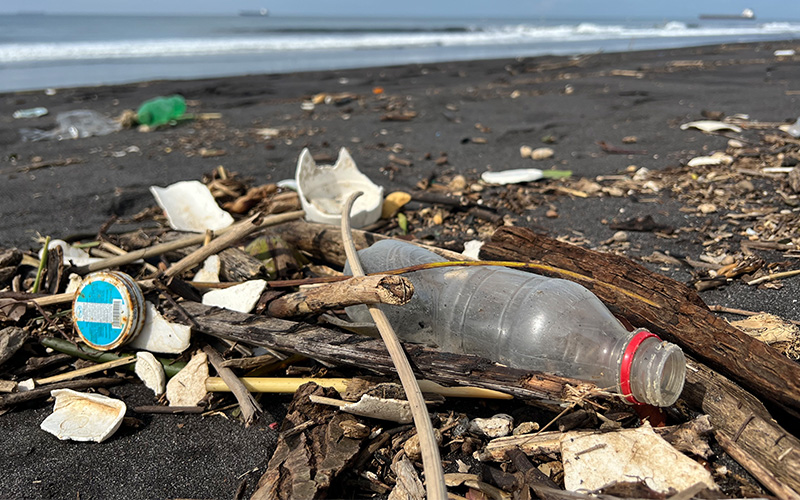
Turn a beach visit into a science adventure! Explore the animals, plants, shells, and even litter stranded on the beach to reveal the secrets of marine life and ocean dynamics.

Try these hands-on activities to introduce your students to microplastics – a hazard for fish and other marine animals – and to our…

