Editorial Issue 77
Light is at the essence of the majority of scientific discoveries and in this issue the members of the EIROforum show us why.
Showing 10 results from a total of 74
Light is at the essence of the majority of scientific discoveries and in this issue the members of the EIROforum show us why.
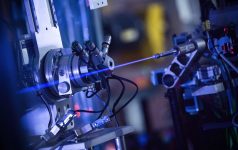
X-ray light does not only enable us to look at our bones, it also helps scientists to analyse tiny molecules that make up all living things.
Invisible soap, heavy water and a research reactor come together to provide enlightening insights into how plants and bacteria turn light into food.
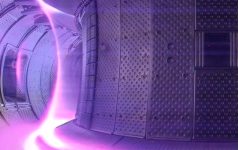
For fusion researchers, light is far more than a symbol, it is an essential tool.
What makes emerald green fade in famous paintings? Scientists at ESRF study how colours fade.
”Faster, Higher, Stronger – Together”, the Olympic motto, could also apply to telescopes with a slight modification: “Bigger, Deeper, Sharper – Together”
Students worldwide can win a life-changing opportunity to work at a real particle accelerator such as CERN, DESY or ELSA.
How tiny quantum particles dig into the mysteries of future materials.
Zinc is an important trace element for plants and animals alike. Learn how nanoparticles could supply zinc to crops without having to add it to the soil.
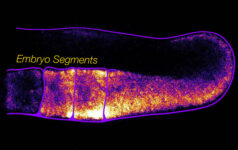
Tick tock: Did you know that there are secret clocks ticking inside living organisms, including us? Let’s dive into the science of biological oscillators.
Editorial Issue 77
How European XFEL uses X-ray light to make the invisible visible
Neutrons elucidate the mysteries of photosynthesis
How light powers the path to fusion energy
Is it light or humidity?
Harvesting light with the biggest eye on the sky
The Beamline for Schools competition: connecting high school students to particle physics since 2014
Neutron science: a quantum story
X-rays shed light on enhancing zinc uptake in pepper plants
Biological oscillations: the rhythms of living things