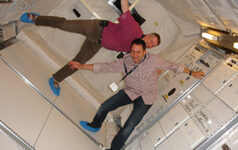
Teachers fly high at the European Space Agency
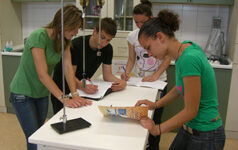
Eleanor Hayes reports on the recent teacher workshop at the European Space Research and Technology Centre.
Showing 10 results from a total of 51
Eleanor Hayes reports on the recent teacher workshop at the European Space Research and Technology Centre.
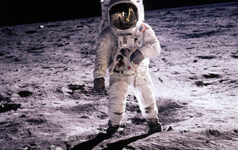
Have you ever looked up at the Moon in a clear night sky and wondered about the very few people who have walked on its surface? What did we learn, and what are we still unsure about? When might humans return to the Moon? Adam Baker investigates.
This year is the International Year of Astronomy. To celebrate, Chris Starr and Richard Harwood suggest some useful websites and other resources to inspire your astronomy teaching.
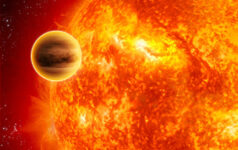
Malcolm Fridlund from the European Space Agency (ESA) describes the search for extra-solar planets and explains how they can help us to understand the origin of life on Earth.
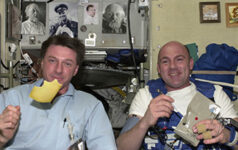
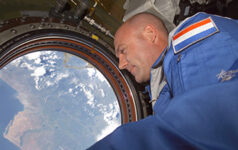
How do astronauts eat, sleep and wash? Can you get ‘seasick’ in space? In the second of two articles about the ISS, Shamim Hartevelt-Velani, Carl Walker and Benny Elmann-Larsen from the European Space Agency investigate.
Lucy Patterson spoke to Greek science teacher Theodoros Pierratos, who recently won the chance to bring physics to life for his students in a truly extraordinary way with the help of the European Space Agency.
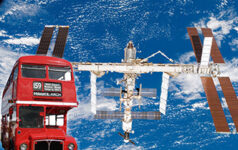
In the first of two articles, Shamim Hartevelt-Velani and Carl Walker from the European Space Agency take us on a trip to the International Space Station.
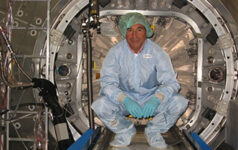
Bernardo Patti is the Columbus mission manager at the European Space Agency. He is an engineer and worked at nuclear power plants before going into space technology. Shortly before Columbus was launched, he talked to Anna-Lynn Wegener.
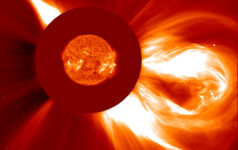
Ever wondered what the solar wind means to us on Earth or what happens when the surface of the Sun erupts sporadically? Lucie Green from University College London's Mullard Space Science Laboratory, UK, describes some of the recent research into the Sun’s atmosphere.
Where do astronauts get their food? What happens to their waste? Adam Williams from the European Space Agency in Darmstadt, Germany, describes the development of an unmanned shuttle to supply the International Space Station.
Teachers fly high at the European Space Agency
Space exploration: the return to the Moon
Education resources for the International Year of Astronomy
The CoRoT satellite: the search for Earth-like planets
The International Space Station: life in space
A classroom in space
The International Space Station: a foothold in space
Laboratory in space: interview with Bernardo Patti
Research into the Sun’s atmosphere
The Automated Transfer Vehicle – supporting Europe in space