Did you know that carbon dioxide dissolves in bodies of water and affects the ocean? Explore the effect of carbon dioxide on ocean chemistry with these practical activities.
Ages: 11-14, 16-19, 14-16; Topics: Earth science, General science, Physics, Science and society, Chemistry
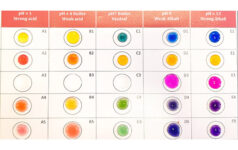
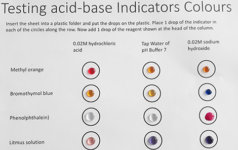
Drop by drop: Learn about pH chemistry and neutralization reactions, and produce wonderful colours using microscale methods that are cheap, quick, and easy.
The PDB Art project aims to make science more accessible and inspire young people to explore the beauty of proteins by bringing together art and science.
Capturing the moment: to use artificial photosynthesis to produce clean energy, we need to better understand it first. Learn about how X-ray free-electron lasers can help.
Ages: 14-16, 16-19; Topics: Biology, Physics, News from the EIROs, Science and society
Need inspiration for teaching about fresh water on Earth? Try these Earthlearningideas for classroom activities that can be performed with very little equipment.
Ages: 11-14, 14-16, 16-19; Topics: Chemistry, Earth science, Science and society
Build your own virtual particle accelerator with the aid of the acceleratAR app and gain a hands-on, immersive understanding of how these machines work.
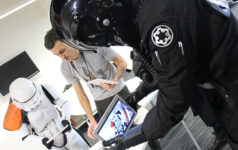
Science fiction can be an engaging starting point for scientific discussions. Learn how one research group is using Star Wars to introduce students to accelerator science.
Ages: not applicable; Topics: Engineering, Physics, Science and society, Careers in STEM