
The numbers game: extending the periodic table
Until a few centuries ago, people believed that the world was made only of earth, air, water and fire. Since then, scientists have discovered 118 elements and the search is on for element 119.
Showing 10 results from a total of 352
Until a few centuries ago, people believed that the world was made only of earth, air, water and fire. Since then, scientists have discovered 118 elements and the search is on for element 119.
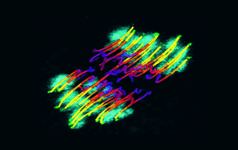
Why does meiosis so often go wrong? And what are the consequences?
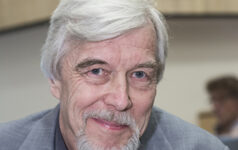
CERN’s director general tells the story behind the Higgs boson – and describes the next steps.
Science in School is published by EIROforum, a collaboration between eight of Europe’s largest inter-governmental scientific research organisations. This article reviews some of the latest news from the EIROforum members (EIROs).
Biologist Juliana Machado Ferreira is using science to combat wildlife traffickers in Brazil.
Finding out what is going on in the core of a fusion experiment at 100 million degrees Celsius is no easy matter, but there are clever ways to work it out.
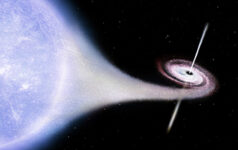
In the third article in this series on astronomy and the electromagnetic spectrum, learn about the exotic and powerful cosmic phenomena that astronomers investigate with X-ray and gamma-ray observatories, including the European Space Agency’s XMM-Newton and INTEGRAL missions.
Science in School is published by EIROforum, a collaboration between eight of Europe’s largest inter-governmental scientific research organisations. This article reviews some of the latest news from the EIROforum members (EIROs).
Why is symmetry so central to the understanding of crystals? And why did ‘forbidden’ symmetry change the definition of crystals themselves?
Research into the genetics of the autism spectrum is increasing our understanding of these conditions, and may lead to better ways to diagnose and manage them.
The numbers game: extending the periodic table
Sloppy fishing: why meiosis goes wrong
Accelerating the pace of science: interview with CERN’s Rolf Heuer
Cool and hot science for a bright future
Cracking down on wildlife trafficking
Seeing the light: monitoring fusion experiments
More than meets the eye: the exotic, high-energy Universe
Bigger, faster, hotter
The new definition of crystals – or how to win a Nobel Prize
Behind the autism spectrum