Tara: an ocean odyssey
After four years travelling around the globe, the schooner Tara has returned with a world’s worth of scientific results.
Showing 8 results from a total of 18
After four years travelling around the globe, the schooner Tara has returned with a world’s worth of scientific results.
Scientific research is not a career that most people believe to be suitable for the blind, but such beliefs are changing. Biologist Geerat Vermeij explains that, whether you are blind or not, science is competitive, tedious and hard – and he loves it.
How do fossils form around hydrothermal vents? Crispin Little describes how he and his team found out – by making their own fossils.
Marine biologist Jean-Luc Solandt tells Karin Ranero Celius about his commitment to study and preserve one of the world’s biggest treasures: the ocean.
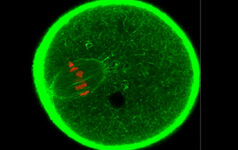
From jellyfish to arsenic detectors via a Nobel Prize: Sonia Furtado reports on the discovery and development of the green fluorescent protein, and interviews scientists at the European Molecular Biology Laboratory (EMBL) in Heidelberg, Germany, about its applications.
Water – Humanity’s Project is a CD-ROM containing a collection of about 300 pieces of media that examine water as an element of daily life as well as an important local and global issue. The collection is suitable for students and teachers of all levels.
Bringing marine science into the classroom can be challenging work for teachers. So why not take the classroom – and the teachers – to sea? Vikki Gunn’s Classroom@Sea project does just that.
Marine ecologists Iris Hendriks, Carlos Duarte, and Carlo Heip ask why – despite its importance – research into marine biodiversity is so neglected.
Tara: an ocean odyssey
To sea with a blind scientist
Hot stuff in the deep sea
Jean-Luc Solandt: diving into marine conservation
Painting life green: GFP
Water – Humanity s Project: media collection for the classroom, By Siemens AG
Classroom@Sea: bringing real marine science into the classroom
Why biodiversity research keeps its feet dry