Emm Barnes from the British Society for the History of Science describes an initiative to develop exciting interdisciplinary activities. And gives the recipe for a delicious edible geology project!
Ages: 14-16; Topics: Biology, Earth science, Science and society, General science
Are migratory birds responsible for the spread of bird flu? Should we kill them all? Lucienne Niekoop and Froukje Rienks from the Netherlands Institute of Ecology argue for a more scientific approach.
Ever wondered what - and who - lies behind the beautiful and fascinating astronomical photographs and observations made with modern telescopes? Douglas Pierce-Price from ESO, the European Organisation for Astronomical Research in the Southern Hemisphere, describes a day in the life of the Very…
Ages: 14-16, 16-19; Topics: Physics, Astronomy / space
One hour and 34 minutes after the bright tail of the Kosmos 3M rocket disappeared from view, more than one hundred students are checking their watches nervously. The first signal from their satellite should arrive any minute. Barbara Warmbein, from the European Space Agency in Noordwijk, the…
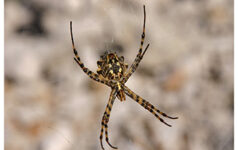
An ambitious Australian school project sent spiders into space to experience microgravity. 'Spiders in Space' will form the basis of a future project involving many more schools worldwide. Lachlan Thompson and Naomi Mathers, from RMIT University in Melbourne, Australia, explain how it all started.
Ages: 14-16; Topics: Biology, Astronomy / space, General science
Sometimes in the wealth of detail of modern science, we lose sight of the unifying factor: the scientific method. Alfredo Tifi, Natale Natale and Antonietta Lombardi explain how they encourage the skills of enquiry, hypothesis and testing.
Ages: <11, 11-14; Topics: Physics, General science
Want to catch an enzyme in the act? Or watch an embryonic brain hard-wire itself? Russ Hodge from the European Molecular Biology Laboratory in Heidelberg, Germany, explains how recent developments in microscopy show cells and organisms at work.
The Mary Rose is one of several famous and historical ships salvaged from the sea in recent decades. Thanks to the anaerobic conditions on the seabed, the remains are well preserved. Montserrat Capellas and Dominique Cornuéjols from the European Synchrotron Radiation Facility (ESRF), in Grenoble,…
The energy demands of our society continue to increase, while the stocks of fossil fuels - still our major energy source - are declining. Chris Warrick from the European Fusion Development Agreement explains why research into fusion offers the hope of a safe and environmentally responsible energy…
There is an increasing demand for an interdisciplinary approach to teaching, but providing inspiring and achievable lessons is no easy task. Chemistry teacher Gianluca Farusi explains how he used two Italian Renaissance paintings to delve into the chemistry of pigment extraction and the physics of…