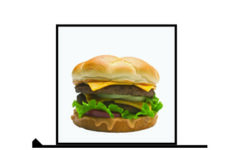
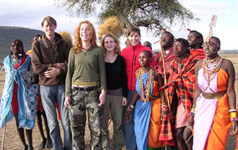
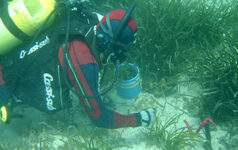
With the help of enthusiastic school students and scientists, the Dutch school competition ‘Imagine’ supports the sustainable production of biodiesel in Mozambique, avocado oil in Kenya and the colorant byxine in Surinam. Daan Schuurbiers and Marije Blomjous, from the Foundation Imagine Life…
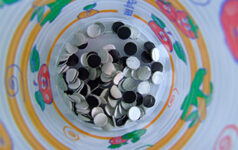
Pongprapan Pongsophon, Vantipa Roadrangka and Alison Campbell from Kasetsart University in Bangkok, Thailand, demonstrate how a difficult concept in evolution can be explained with equipment as simple as a box of buttons!
One of the many purposes of science is to support the humanities. With this in mind, Gianluca Farusi and his students set out to investigate and prepare iron-gall ink, a historically significant material for the transmission of knowledge.
Péter Székely from the University of Szeged, Hungary, and Örs Benedekfi from the European Fusion Development Agreement in Garching, Germany, investigate how a star dies and what a nearby supernova explosion would mean for us on Earth.
Ages: 14-16, 16-19; Topics: Physics, Astronomy / space
Ever wished you could borrow a PCR machine for your lessons? And perhaps an expert to show your students how to use it? Marc van Mil introduces DNA labs that bring genomics directly to the classroom.
Shortly before Christmas 2006, German ESA astronaut Thomas Reiter returned from the International Space Station. A month later, Barbara Warmbein asked him about his trip, the experiments he did – and how to become an astronaut.
Ages: 11-14, 14-16, 16-19; Topics: Physics, Biology, Astronomy / space
Darren Hughes from the Institut Laue-Langevin in Grenoble, France takes a look at stress. How can it be manipulated to make safer rails for trains or more efficient wind turbines – and what can we learn from neutron- and X-ray analysis?