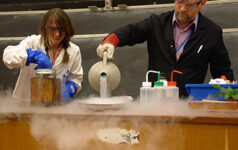
Tim Harrison and Dudley Shallcross from the University of Bristol, UK, describe some of the University’s activities to share a delight in chemistry with school students.
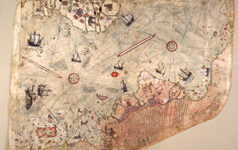
Yasmin Khan from the Science Museum in London, UK, reveals how deeply our modern civilisation has been enriched by previous Muslim civilisations – and argues for a more balanced approach to the history of science.
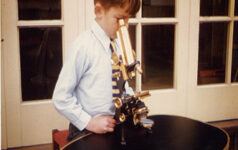
Professor Sir Alec Jeffreys, the inventor of DNA fingerprinting, remembers his childhood passion for science, explains what we have learned from direct DNA analysis, and describes his work with Chernobyl survivors. Interviewed by Russ Hodge and Anna-Lynn Wegener from the European Molecular Biology…
Ages: 16-19; Topics: Biology, General science, Chemistry, Science and society
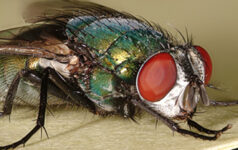
Many of you were fascinated (and disgusted!) by the article about forensic entomology in our last issue. Paula Starbäck, the reviewer, suggested that it would be a fascinating activity for students, if only someone could find a way to avoid the terrible smell. We challenged you to come up with a…
Fay Christodoulou, a Greek PhD student at the European Molecular Biology Laboratory (EMBL), is an example that shows not every researcher is born with a passion for science. She describes to Anna-Lynn Wegener from EMBL how her biology teacher inspired a long-lasting interest in science.
How do I become a star-chaser? How do we recognise particles that we don’t know? When will fusion power become available to mankind? Sabina Griffith from the European Fusion Development Agreement in Garching, Germany, describes the guided round-the-world trip through the science of the EIROforum…
Catch a Star!, an international competition for school students, is starting its fifth year. Douglas Pierce-Price from ESO invites students from all over the world to take part.