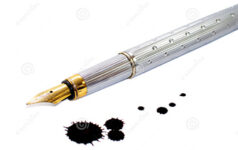
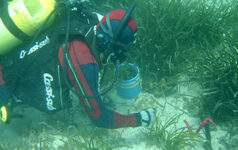
One of the many purposes of science is to support the humanities. With this in mind, Gianluca Farusi and his students set out to investigate and prepare iron-gall ink, a historically significant material for the transmission of knowledge.
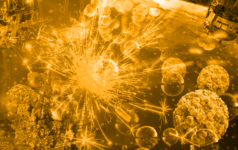
Péter Székely from the University of Szeged, Hungary, and Örs Benedekfi from the European Fusion Development Agreement in Garching, Germany, investigate how a star dies and what a nearby supernova explosion would mean for us on Earth.
Ages: 14-16, 16-19; Topics: Physics, Astronomy / space
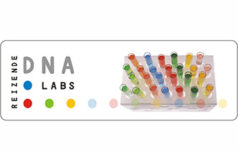
Ever wished you could borrow a PCR machine for your lessons? And perhaps an expert to show your students how to use it? Marc van Mil introduces DNA labs that bring genomics directly to the classroom.
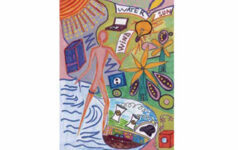
In Issue 4, we challenged you and your students to design the cover for Science in School and were very impressed by the quality of the entries. Despite gloomy studies about decreasing interest in the sciences, there are clearly a lot of very enthusiastic and artistically gifted young scientists in…
“If you are not interested in how evolution came about, and cannot conceive how anyone could be seriously concerned about anything other than human affairs, then do not read it: it will only make you needlessly angry,” wrote John Maynard Smith about The Selfish Gene.
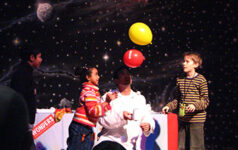
Peter Rebernik from the WONDERS project describes a ride in the Carousel of Science from Moscow to Lisbon, Reykjavik to Jerusalem. Perhaps even in your town!
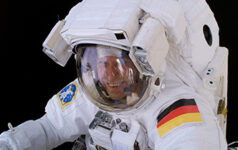
Shortly before Christmas 2006, German ESA astronaut Thomas Reiter returned from the International Space Station. A month later, Barbara Warmbein asked him about his trip, the experiments he did – and how to become an astronaut.
Ages: 11-14, 14-16, 16-19; Topics: Physics, Biology, Astronomy / space