It can be difficult and time consuming to develop materials for really good science lessons. Many scientific research organisations, however, provide teaching resources, often designed together with teachers. Researchers provide scientific expertise and the teachers bring years of experience in the…
Sigrid Griet Eeckhout from the European Synchrotron Radiation Facility in Grenoble, France, investigates what determines the toxicity of mercury compounds – and how X-ray light is helping to solve the mystery.
Professor Lewis Wolpert discusses his controversial ideas about belief, science education and much more with Vienna Leigh from the European Molecular Biology Laboratory.
Ages: 16-19; Topics: Biology, General science, Profiles
Why do some people find that their urine smells horribly after eating asparagus? Should green beans be cooked with the lid on or off? How hot are chilli peppers? What affects the colour and texture of cooked vegetables? These are a few of the questions that the Kitchen Chemistry book and CD-ROM aim…
Gemma Guilera tells Montserrat Capellas about the joys of her rollercoaster approach to life. Fearlessly, she has started a new life more than once, making her home in very different European cities in the pursuit of a scientific career. Today, she faces a new challenge: motherhood.
Henri Boffin from ESOw1 in Garching, Germany, follows the mystery of gamma-ray bursts from their first discovery to the most recent research on these dramatic astronomical explosions.
Bringing marine science into the classroom can be challenging work for teachers. So why not take the classroom – and the teachers – to sea? Vikki Gunn’s Classroom@Sea project does just that.
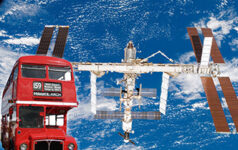
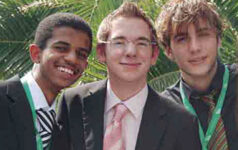
Students Jan Měšťan and Jan Kotek and teacher Marek Tyle from the Gymnázium Písek in the Czech Republic won the 2007 Catch a Star competition. Sai Pathmanathan describes their prize-winning project.
Ages: 14-16, 16-19; Topics: Physics, Astronomy / space