Many of the national Science on Stage organisations are becoming increasingly well established: running inspirational national events, inviting participants from across Europe to join them, and setting up projects with teachers in other countries. This commitment to European science education…
If you ask Italian school students to name an active volcano in their country, they will have a wealth of names – such as Vesuvius, Etna, Stromboli and all the other Aeolian Islands – to choose from.
Anna Lorenc from the Volvox project explains the importance of the enzyme urease and presents a protocol to demonstrate urease activity in the classroom.
It is a regrettable fact that there is a marked decline of interest in learning about science among school students today (in many developed countries, at least).
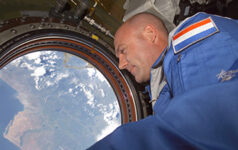
In the first of two articles, Shamim Hartevelt-Velani and Carl Walker from the European Space Agency take us on a trip to the International Space Station.
Ages: 14-16, 16-19; Topics: Physics, Astronomy / space
Horror movies are a popular, albeit rather despised, film genre. It is all the more surprising that the most horrific of the current crop of scary movies has recently won an Oscar, not to mention the Nobel Peace Prize awarded to its main protagonist.
Laura Strieth, Karen Bultitude, Frank Burnet and Clare Wilkinson use drama and debate to encourage young people to discuss genetics and what it means for us all. Why not join in?
Herbi Dreiner and Tobias Strehlau describe how a university physics show inspired a secondary-school teacher and his students to perform their own school physics show. Why not try it in your school?
Any book that has in its introduction “Physics is the action department of science... only physics can explain what happens if you throw [an apple] at a brick wall at 200 mph” has my attention.