Earthquakes, global climate or the placement of wind farms – with the help of geographic information systems, these can all be investigated dynamically in the classroom. Joseph Kerski describes how.
We’ve all sometimes felt ‘beside ourselves’, but have you ever felt that you were actually outside yourself – looking at yourself from outside your own body? Marta Paterlini talked to Henrik Ehrsson, a scientist studying this phenomenon.
Ages: 14-16; Topics: Biology, General science, Health, Science and society
Are you looking for ideas to spice up your earth science class? Why not try out one of the rich collection of activities developed by Chris King, Elizabeth Devon and Peter Kennett from Earth Learning Idea.
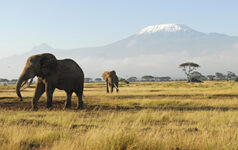
This year has been proclaimed the International Year of Biodiversity. During 2010, governments will seek to reach agreement on a new biodiversity target, to be decided at the Nagoya summit in October. Will this enable us to save not only whales and tigers, but also our own species? Marlene Rau…
Werner and Gabriele Stetzenbach tell us how kindergarten and primary-school children discover the world of physics together with secondary-school students as their mentors. Why not try it in your school?
When I recently told a taxi driver that I was on my way to give a lecture on evolution in northern Germany, the young man asked me, looking straight ahead, “So, do you think Darwin got it right?” A bit taken aback, I answered that yes, by and large, Darwin had got it just right – only to be…
We know that particular genetic sequences can help us to survive in our environment – this is the basis of evolution. But demonstrating which genetic sequences are beneficial and how they help us to survive is not easy – especially in wild populations. Jarek Bryk describes some relevant recent…
Nataša Gros, Tim Harrison, Irena Štrumbelj Drusany and Alma Kapun Dolinar introduce a selection of experiments with a simple spectrometer designed especially for schools – and give details of how to perform one of the activities.
A string of glucose molecules: starch. It sounds simple, but it isn’t. Dominique Cornuéjols and Serge Pérez explore the intricacies of its structure – and show that the mystery is by no means solved.
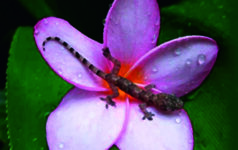
In celebration of the International Year of Biodiversity 2010, Matt Kaplan takes us on a whirlwind tour through the previous year’s most inspiring discoveries of biodiversity.
Ages: 14-16, 16-19; Topics: Biology, General science