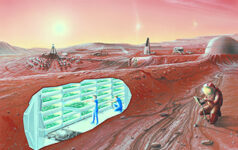
What does it take to live on the Moon or even Mars? Erin Tranfield suggests an interdisciplinary teaching activity to get your students thinking about this – and learning a lot of science along the way.
As though planets from outside our Solar System were not exciting enough, astronomers have recently discovered a planet orbiting a star from outside our galaxy Johny Setiawan reports.
Science in School is published by EIROforum, a collaboration of research organisations. Eleanor Hayes, Editor-in-Chief of Science in School, reviews some of the latest news from the EIROforum members.
Ages: not applicable; Topics: News from the EIROs, Biology, Astronomy / space, Health
With the help of a detective game, Kenneth Wallace-Müller from the Gene Jury team introduces the use of DNA in forensics and the ethical questions involved.
The Ask a Biologist website is dedicated to answering questions on all aspects of biology. Although aimed primarily at school students of all ages, questions are accepted from anyone, whatever their age, including teachers.
Exploring the Mystery of Matter: The ATLAS Experiment is an engaging and beautifully presented photo book that provides a captivating tour of the marvels of the large-scale particle detector experiments of the Large Hadron Collider (LHC) at CERN, the world’s largest particle physics laboratory.
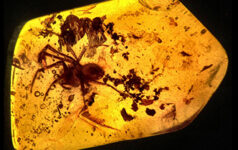
Did you know that the electron and electricity are named after amber, the ‘gold’ of the Baltic Sea? Bernhard Sturm’s teaching unit based on this fossilised resin introduces not only conductivity but also many other characteristics of solid organic compounds.