A Stem Cell Story portrays scientists from the field of stem-cell research, their individual research interests and the potential applications of their work. The DVD is aimed at the public, to shed light on stem-cell research and on the science behind the headlines and public debate of the last few…
Do you ever get frustrated with that mess of cables connecting your DVD player to your satellite dish, TV and video recorder? Did you know that you can cut those cables – and still get a signal to pass between the machines? Alessandro Iscra, Maria Teresa Quaglini and Giuseppina Rossi from Italy…
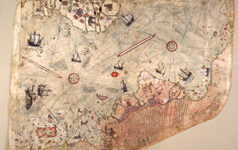
Yasmin Khan from the Science Museum in London, UK, reveals how deeply our modern civilisation has been enriched by previous Muslim civilisations – and argues for a more balanced approach to the history of science.
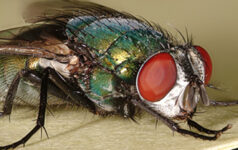
Many of you were fascinated (and disgusted!) by the article about forensic entomology in our last issue. Paula Starbäck, the reviewer, suggested that it would be a fascinating activity for students, if only someone could find a way to avoid the terrible smell. We challenged you to come up with a…
Fay Christodoulou, a Greek PhD student at the European Molecular Biology Laboratory (EMBL), is an example that shows not every researcher is born with a passion for science. She describes to Anna-Lynn Wegener from EMBL how her biology teacher inspired a long-lasting interest in science.
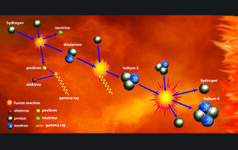
How do I become a star-chaser? How do we recognise particles that we don’t know? When will fusion power become available to mankind? Sabina Griffith from the European Fusion Development Agreement in Garching, Germany, describes the guided round-the-world trip through the science of the EIROforum…
Graham Gardner from the Inter-Community School in Zürich, Switzerland, describes how an attempt to interest his students in chemical separation techniques developed into a full-scale interdisciplinary detective mystery.