Choosing Children: Genes, Disability, and Design, By Jonathan Glover
The aim of Choosing Children is to investigate how humanity should regulate its fast-increasing ability to genetically design the babies of tomorrow.
Showing 5 results from a total of 45
The aim of Choosing Children is to investigate how humanity should regulate its fast-increasing ability to genetically design the babies of tomorrow.
These two DVD sets, produced by the Howard Hughes Medical Institute as part of its Holiday Lectures on Science programme, address two highly interesting subjects which directly or indirectly affect our everyday lives: biological clocks and evolution.
In this autobiographical book, Maurice Wilkins presents the chronological story of the discovery of DNA structure in 1953. As The Third Man of the Double Helix, Wilkins is well placed to describe the complex scientific background and people involved in the breakthrough that earned him and fellow…
In The Origin of Species, published in 1859, Charles Darwin described evolution as a process subject to diverse influences. Natural selection, of course, leads to adaptation in a manner similar to the changes elicited by breeders of pets or livestock.
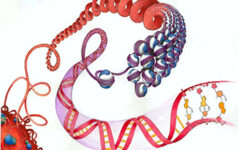
We tend to think of our genetic information as being encoded in DNA – in our genes. Brona McVittie from Epigenome NoE, UK, describes why this is only part of the story.
Choosing Children: Genes, Disability, and Design, By Jonathan Glover
Clockwork Genes: Discoveries in Biological Time and Evolution: Constant Change and Common Threads
The Third Man of the Double Helix, By Maurice Wilkins
Evolution in Four Dimensions: Genetic, Epigenetic, Behavioral, and Symbolic Variation in the History of Life, By Eva Jablonka and Marion J. Lamb
Epigenetics