
Cracking down on wildlife trafficking
Biologist Juliana Machado Ferreira is using science to combat wildlife traffickers in Brazil.
Showing 10 results from a total of 302
Biologist Juliana Machado Ferreira is using science to combat wildlife traffickers in Brazil.
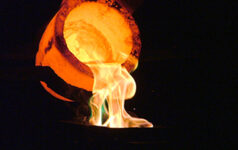
From a homemade thermometer to knitting needles that grow: here are some simple but fun experiments for primary-school pupils to investigate what happens to solids, liquids and gases when we heat them.
In the third article in this series on astronomy and the electromagnetic spectrum, learn about the exotic and powerful cosmic phenomena that astronomers investigate with X-ray and gamma-ray observatories, including the European Space Agency’s XMM-Newton and INTEGRAL missions.
Why is symmetry so central to the understanding of crystals? And why did ‘forbidden’ symmetry change the definition of crystals themselves?
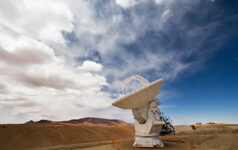
Astronomers use giant radio telescopes to observe black holes and distant galaxies. Why not build your own small-scale radio telescope and observe objects closer to home?
During an eclipse, the Sun or the Moon seems to disappear. What is happening? Why not explore this fascinating phenomenon in the classroom, with an easy to build model?
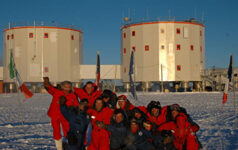
For scientists at the European Space Agency, a mission to Mars means going to Antarctica first.
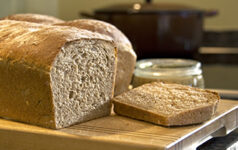
Something as everyday as bread can offer a surprising spectrum of interdisciplinary teaching opportunities.
Renewable, clean, unlimited energy – how can it be achieved? Christine Rüth from EFDA introduces the tokamak, the most advanced fusion device.
When you read the newspaper, how do you know what to believe? Ed Walsh guides you and your students through the minefield of science in the media.
Cracking down on wildlife trafficking
The effect of heat: simple experiments with solids, liquids and gases
More than meets the eye: the exotic, high-energy Universe
The new definition of crystals – or how to win a Nobel Prize
Build your own radio telescope
Creating eclipses in the classroom
The white continent as a stepping stone to the red planet
Bread-making: teaching science in primary school
Harnessing the power of the Sun: fusion reactors
Bad science: how to learn from science in the media