Articles

Filter
Age group
Topic
Filter

Showing 5 results from a total of 15

| Issue 19

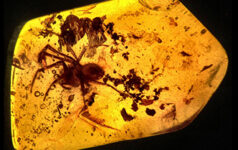
Amber: an introduction to organic chemistry

Did you know that the electron and electricity are named after amber, the ‘gold’ of the Baltic Sea? Bernhard Sturm’s teaching unit based on this fossilised resin introduces not only conductivity but also many other characteristics of solid organic compounds.

Ages: 16-19;
Topics: Physics, Chemistry
             

| Issue 15

GIS: analysing the world in 3D

Earthquakes, global climate or the placement of wind farms – with the help of geographic information systems, these can all be investigated dynamically in the classroom. Joseph Kerski describes how.

Ages: 14-16, 16-19;
Topics: Earth science
     

| Issue 15

Homo sapiens – an endangered species?

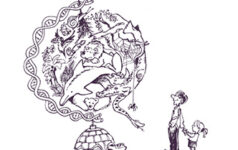
This year has been proclaimed the International Year of Biodiversity. During 2010, governments will seek to reach agreement on a new biodiversity target, to be decided at the Nagoya summit in October. Will this enable us to save not only whales and tigers, but also our own species? Marlene Rau…

Ages: 14-16;
Topics: Biology, Chemistry, Earth science
           

| Issue 14

Spectrometry at school: hands-on experiments

Nataša Gros, Tim Harrison, Irena Štrumbelj Drusany and Alma Kapun Dolinar introduce a selection of experiments with a simple spectrometer designed especially for schools – and give details of how to perform one of the activities.

Ages: 16-19;
Topics: Chemistry
             

| Issue 2

A new tree of life

At the European Molecular Biology Laboratory in Heidelberg, Germany, Peer Bork’s research group has meticulously reconstructed a new tree of life – tracing the course of evolution. Russ Hodge explains.

Ages: 16-19;
Topics: Biology