Articles

Filter
Age group
Topic
Filter

Showing 10 results from a total of 14

| Issue 76

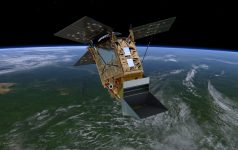
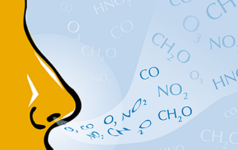
Eyes in the sky: tracking air pollution with satellites

What can the colours on a satellite map actually tell us about the air we breathe? Join us as we explore how the Copernicus Sentinel satellites detect gases such as nitrogen dioxide, and how chemistry helps us understand what’s happening in the atmosphere above us.

Ages: 14-16;
Topics: Astronomy / space, Chemistry, Earth science, Science and society, Sustainability

| Issue 31

Greening chemistry

Chemistry is not always completely environmentally friendly; green chemistry is working to change that.

Ages: 11-14, 14-16, 16-19;
Topics: Chemistry, Earth science, Science and society
       

| Issue 22

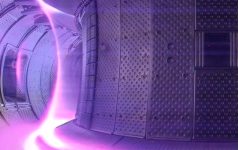
Harnessing the power of the Sun: fusion reactors

Renewable, clean, unlimited energy – how can it be achieved? Christine Rüth from EFDA introduces the tokamak, the most advanced fusion device.

Ages: <11, 11-14, 14-16, 16-19;
Topics: Physics, Chemistry, Engineering
           

| Issue 22

Revealing the secrets of permafrost

Studying permafrost enables us to look not only into the past, but also into the future. Miguel Ángel de Pablo, Miguel Ramos, Gonçalo Vieira and Antonio Molina explain.
Ages: 14-16, 16-19;
Topics: Physics, Astronomy / space, Earth science, Engineering
       

| Issue 19

Amber: an introduction to organic chemistry

Did you know that the electron and electricity are named after amber, the ‘gold’ of the Baltic Sea? Bernhard Sturm’s teaching unit based on this fossilised resin introduces not only conductivity but also many other characteristics of solid organic compounds.

Ages: 16-19;
Topics: Physics, Chemistry