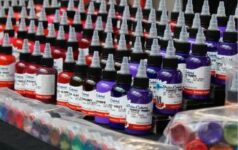
The aspirin screen experiment
An online resource published by the Royal Society of Chemistry
Showing 10 results from a total of 1045
An online resource published by the Royal Society of Chemistry
When thinking about diffraction studies, X-rays most often come to mind, but neutrons can also provide important structural information – and could help in the fight against HIV.
Chemistry is not always completely environmentally friendly; green chemistry is working to change that.
Methional played centre stage at the recent Second International Contest for Note by Note Cooking. The challenge: to make dishes containing only methional and ‘pure’ compounds such as milk proteins, alcohols, amino acids and flavour chemicals, and, ideally, no plant tissues, meat, fish or eggs
Clues to the history of the Earth, the Milky Way and the Universe are hidden on the lunar surface.
Vasiliki Kioupi has always run science experiments with her students. Now she is also testing various pedagogical methods in her classroom and is moving towards teaching the teachers.
Could hydrogen be the best alternative for fossil fuels? This demonstration shows how a hydrogen economy might work in practice.
Building a hypothetical family portrait can help students to understand genetics.
The world’s largest particle accelerator, the LHC, is deepening our understanding of what happened just after the Big Bang. Here’s how to explore the principles of a particle accelerator in your classroom.
These simple but unusual life forms can be used to develop students’ understanding of life and the scientific method.
The aspirin screen experiment
Fighting HIV with neutrons
Greening chemistry
From methional to fried chicken
Lunar Diary: a chronicle of Earth’s journey through space and time, as seen from the Moon
Experienced and experiencing teacher
A classroom hydrogen economy
All in the family
Build your own particle accelerator
Intelligent slime? A hands-on project to investigate slime moulds