What can the colours on a satellite map actually tell us about the air we breathe?
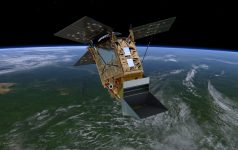
Join us as we explore how the Copernicus Sentinel satellites detect gases such as nitrogen dioxide, and how chemistry helps us understand what’s happening in the atmosphere above us.
Did you know that carbon dioxide dissolves in bodies of water and affects the ocean? Explore the effect of carbon dioxide on ocean chemistry with these practical activities.
Ages: 11-14, 16-19, 14-16; Topics: Earth science, General science, Physics, Science and society, Chemistry
Sue Johnson from the Institute of Education, London University, UK, introduces the Plant Scientists Investigate project, and presents three plant-related activities for primary-school children. Compare the carbon dioxide concentrations of inhaled and exhaled air, visualise your own oxygen…
In this, the second of two articles, climate researcher Rasmus Benestad from the Norwegian Meteorological Institute examines the evidence that humans are causing climate change.
Ages: 14-16, 16-19; Topics: Earth science, Science and society