Superman, Batman, Lightning Lad, Spiderman – they all apply the principles of physics to perform their extraordinary feats… or do they? Which laws are suspended, and which are extended? Which are indeed forgotten completely?
A professor once told me in a job interview that he prefers to hire women for his laboratory “because they get things done”. Nonetheless, although a blunt question as to whether you plan to have children is certainly out of fashion, female scientists still experience situations that are…
The Science Behind Medicines CD-ROM is a teaching resource produced by GlaxoSmithKline and aimed at biology and chemistry teachers of post-16 students. It has sections on drug discovery, structural formulae, bacterial infections, asthma and viral infections.
Power, Sex, Suicide: three words that immediately aroused my interest in reading this book. The subtitle, Mitochondria and the Meaning of Life, explains what the book is about – the crucial role of mitochondria in our lives.
Films about science or even pseudo-science can be powerful tools in the classroom. Heinz Oberhummer from the Cinema and Science project provides a toolkit for using the video-clip collection of the European Space Agency.
Detlev Arendt, a molecular biologist at the European Molecular Biology Laboratory, Heidelberg, Germany, describes to Russ Hodge how his cutting-edge research is following in the footsteps of a 19th-century scientist.
Everyone knows what symmetry is. In this article, though, Mario Livio from the Space Telescope Science Institute, Baltimore, USA, explains how not only shapes, but also laws of nature, can be symmetrical.
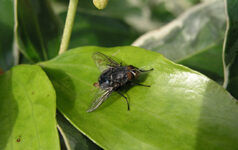
Are you a biologist with a mission? Do you want to fight crime with science? Martin Hall and Amoret Brandt from The Natural History Museum in London, UK, introduce the fascinating (and smelly) field of forensic entomology.
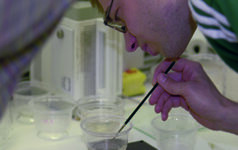
Wetlands are key habitats for a vast range of wildlife. Richard Harwood and Chris Starr, from Aiglon College, Switzerland, describe a school project to measure water quality in a local wetlands region.