It can be difficult and time consuming to develop materials for really good science lessons. Many scientific research organisations, however, provide teaching resources, often designed together with teachers. Researchers provide scientific expertise and the teachers bring years of experience in the…
Halina Stanley from the American School in Grenoble, France, reviews some of her favourite ‘ask a scientist’ websites in English and French. Thanks to the help of many readers throughout Europe, we can also draw your attention to sites in Croat, Danish, Finnish, Hungarian, Norwegian,…
Jenny List, a young particle physicist working at DESY in Germany, leads her own research group to find out how the Universe works. She talks to Barbara Warmbein.
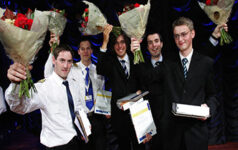
Stephen Parker from the European Commission describes a contest that demonstrates the truly astonishing achievements of some aspiring young scientists.
How do I become a star-chaser? How do we recognise particles that we don’t know? When will fusion power become available to mankind? Sabina Griffith from the European Fusion Development Agreement in Garching, Germany, describes the guided round-the-world trip through the science of the EIROforum…
Science on Stage and the European Science Teaching Awards 2005: choosing the best of the best, special mentions and how the jury voted. Myc Riggulsford, UK science broadcaster and journalist, and Barbara Warmbein, from the European Space Agency in Noordwijk, the Netherlands, describe how the…
The worldwide web is a wonderful source of information, but sometimes the sheer amount of content can be overwhelming. Where do you start looking? In each issue of Science in School, we will suggest useful websites for particular purposes.
Would you know how to turn a bucket into a seismograph, how to make a scale model of a DNA double helix from cans and bottles, or how to simulate a human eye with the help of a shampoo bottle? Barbara Warmbein from the European Space Agency in Noordwijk, the Netherlands, finds out.