Articles

Filter
Age group
Topic
Filter

Showing 10 results from a total of 262

| Issue 8

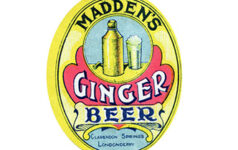
Ginger beer: a traditional fermented low-alcohol drink

Because of its low alcohol content, ginger ‘beer’ is a popular drink with British children. Dean Madden from the National Centre for Biotechnology Education, University of Reading, UK, gives his recipe for introducing younger students to the principles of fermentation, food hygiene and the…

Ages: 14-16, 16-19;
Topics: Biology, Chemistry
                 

| Issue 7

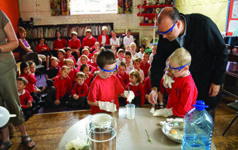
Primary circuses of experiments

Catch them young! Alex Griffin, Tim Harrison and Dudley Shallcross from the University of Bristol, UK, show how important it is to interest young children in science – and how much fun it can be!

Ages: <11;
Topics: Chemistry
         

| Issue 7

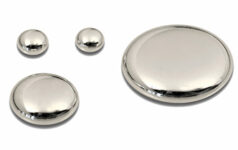
Mercury: a poisonous solution

Sigrid Griet Eeckhout from the European Synchrotron Radiation Facility in Grenoble, France, investigates what determines the toxicity of mercury compounds – and how X-ray light is helping to solve the mystery.

Ages: 16-19;
Topics: Chemistry, Earth science
           

| Issue 6

Small molecules make scents

Angelika Börsch-Haubold demonstrates the olfactory delights of organic chemistry.

Ages: 16-19;
Topics: Biology, Chemistry
         

| Issue 6

Recovering Pompeii

Do your students find it hard to see the application of science to other subjects? Montserrat Capellas from the European Synchrotron Radiation Facility in Grenoble, France, explains how modern chemical analyses are shedding light on ancient Pompeii.

Ages: 16-19;
Topics: Chemistry
     

| Issue 6

Monastic ink: linking chemistry and history

One of the many purposes of science is to support the humanities. With this in mind, Gianluca Farusi and his students set out to investigate and prepare iron-gall ink, a historically significant material for the transmission of knowledge.

Ages: 14-16, 16-19;
Topics: Biology, Chemistry
     

| Issue 5

Taking the stress out of engineering

Darren Hughes from the Institut Laue-Langevin in Grenoble, France takes a look at stress. How can it be manipulated to make safer rails for trains or more efficient wind turbines – and what can we learn from neutron- and X-ray analysis?

Ages: 14-16, 16-19;
Topics: Physics, Chemistry, Engineering
     

| Issue 5

Plastics, naturally

We sit on them, wear them and cook with them: plastics are everywhere. Yet this very versatility makes it difficult to produce and dispose of plastics in environmentally friendly ways. David Bradley explains how researchers at the University of Manchester, UK, are working on a solution.

Ages: 14-16, 16-19;
Topics: Biology, Chemistry, Earth science